
AiW Guest: Difrodah Mnyika.
AiW note: this is the second in our 2024 Caine Prize Shortlist Reviews series (full series here); today, our review is of Nigerian writer Uche Oknonkwo’s shortlisted story, ‘Animals’, published in ZYZZYVA, in 2024.
NB: Our reviews may contain spoilers! Read ‘Animals’ in full, available via the shortlisted stories page on the Caine Prize website.

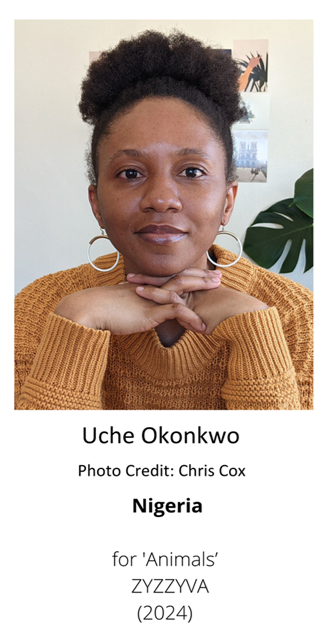
Uche Okonkwo’s ‘Animals’ is a delightful yet thought-provoking exploration of family life that resonates with the universal experiences of the internal dynamics and societal forces shaping our closest relationships. Centered on a Nigerian household—Uzoma, her husband Ebube, their children Cherish and Nedu, and a recent addition of a one-eyed chicken who is named Otuanya—the story delves into themes of affection, duty, and individuality. Through engaging and unpretentious storytelling, Okonkwo captures how each family member’s unique experiences and values influence their collective identity, inviting readers to see reflections of their own lives in these characters.
While reference to the story’s title remains intriguingly indirect, it threads through to the very heart of ‘Animals’. It is there, for example, in the relatable conflict between sentiment and practicality. Uzoma, pragmatic and resourceful, brings the chicken home, intending to prepare a meal; her son Nedu sees “Otuanya”, naming the bird in a formal family ceremony in a direct attempt to swerve the inevitability of its slaughter, recognising a kindred in the half-blindness he fleetingly once experienced as a child, as a friend deserving of love. Becoming “the best part of [his] days…
[e]very time Nedu had to leave Otuanya—to make his bed, or for his mandatory study period supervised by Cherish, or to watch reruns of Ben 10 in the cool of the air-conditioned living room—he felt guilty, worried that Otuanya would be lonely without him. The thought was almost enough to bring him to tears.”
This everyday dilemma around the chicken’s place in the family home highlights the contrasting values of innocence and pragmatism between son and mother. Okonkwo deftly uses this conflict to explore deeper themes, such as empathy, parental authority, and the small, unspoken sacrifices made in family life. Her narrative style allows the emotional complexity of these and the choices of the other characters to emerge organically, drawing readers into the family’s quiet struggle.
‘Animals’ also underlines the ways that a family’s internal tensions can become more poignant through their interactions outside the home. In this case, a range of shifts are driven in particular by an incident with a police officer who stops the family car at a checkpoint, demanding his “weekend allowance”. Relayed early in the story, though seemingly peripheral to the dramas of the household, this scene is pivotal to the story’s emotional and thematic depth, resonating with the titular theme differently in each of the characters’ narrative arcs. Uzoma’s tense encounter with the policeman reveals her vulnerability as a mother and wife, balancing societal expectations and personal agency. Setting off an unexpected chain of events, her growing anger and subsequent contempt for her husband, Ebube’s passivity stems from this moment, also influencing her impulsive decision to bring home the chicken. Through it, Okonkwo addresses broader themes of police brutality, corruption, and societal complicity—issues central to contemporary Nigerian discourse, particularly in the context of movements like #ENDSARS. The imagery of the police “with blood on their hands” alongside and the family’s hesitance to “kill the chicken” offers a layered metaphor on cowardice, agency, and complicity, urging readers to consider the parallels between human and animalistic behaviors.
The way this incident is handled is emblematic of the subtlety Okonkwo manages throughout, providing the baseline from which the skilful characterisation of ‘Animals’ rises. The story begins with the youngest child, Nedu’s perspective, coming to us from within the third-person voice, which later shifts to internalise the focus on other characters who then take up the lead of the narrative. We learn about the chicken being brought home and the event in the car from Nedu’s point of view, allowing Okonkwo to deftly align them together, both with his memories of fear in the moment – the “impenetrable black” of the officer’s uniform, his gun up close, a “dull AK-47 with a rash of rust creeping across its barrel like an infection” – and with his feelings about his mother’s nervousness with the chicken, as the realities of killing “an entire animal” begin to dawn on her. Though layered with these sophisticated moves, Okonkwo’s writing style, not just accessible but also evocative, brings a sense of warmth and realism to each character, including the one-eyed chicken. Her straightforward language captures the weight of seemingly mundane choices without overstating them. The humor in her prose balances the story’s serious themes, creating a reflective yet grounded tone. This careful approach invites readers to engage with the characters’ dilemmas personally, adding intimacy to the story’s insights on family dynamics and fostering a sense of empathy.
Moreover, each relationship in ‘Animals’ adds a layer of nuance, allowing Okonkwo to portray the intricate roles and identities within a family with a subtlety that brings out the depth and complexity of the characters. Uzoma and Ebube’s marriage is clearly built on trust and quiet respect. Even as the disruptive encounter in the car echoes in their partnership, Ebube provides stability while Uzoma manages household demands; though he takes a quieter role, Ebube’s presence continues to be a steadying force. Despite Uzoma’s gnawing dissatisfaction, this understated portrayal reflects the traditional yet evolving roles within their household, highlighting how each partner’s contributions create a cohesive, if imperfect, balance.
Okonkwo portrays the parental bond as a reminder that children’s perspectives often prompt parents to re-evaluate their own, subtly shaping family values. Uzoma’s relationship with her daughter Cherish, the eldest, reflects both closeness and expectation. However, Cherish’s budding independence—symbolized by her awakening sexuality in her crush on a neighborhood boy—demonstrates a desire to explore life beyond her mother’s expectations. In contrast, Uzoma’s relationship with Nedu is tender and marked by gentle friction. Nedu’s attachment to Otuanya challenges Uzoma’s plans of “ushering the bird to its savoury fate” – tempting her to reconsider her practical stance: “Remember, remember, all roads lead to my pepper soup pot”. Nedu’s instinctive empathy serves as a counterbalance to her pragmatism, nudging her toward a more flexible approach. Okonkwo’s restraint in depicting this relationship makes their interactions touching and realistic.
Ebube’s connection with his children reflects the diversity within parental roles. With Cherish, there is mutual respect as she starts to mirror his calm and responsible nature. Meanwhile, his relationship with Nedu is more hands-off, allowing his son’s compassion to flourish freely. Okonkwo’s writing here is subtle, using descriptive restraint to convey Ebube’s role as both a grounding influence and an observer. Through these contrasting relationships, Okonkwo illustrates how a single figure can provide varied guidance, fostering individuality within a family’s shared identity.
‘Animals’ also hints at the larger social forces influencing family life through these family dynamics and character-driven moments. Uzoma’s practicality, for instance, reflects the economic realities she faces as a mother. At the same time, Nedu’s attachment to Otuanya quietly resists these constraints, offering a worldview rooted in kindness rather than utility. Okonkwo’s observant style allows readers to understand how each character’s experiences are shaped by family bonds and societal expectations, adding depth to the story’s exploration of identity within relationships.
Ultimately, ‘Animals’ is a story about empathy, individuality, and the unseen compromises that keep families together. The prose is skilful and the short form is brought to life with the finesse of Okonkwo’s style—marked by its clarity, warmth, and balance of humor and depth. But it is also this requirement for brevity that, for this reader, opens a potential critique. For instance, while the police encounter is rich with metaphorical significance, it could be more deliberately integrated in its comment on the external forces that influence energies and desires in the home. Similarly, though intentionally understated to underscore his character development, Ebube’s subdued presence might leave readers wishing for a deeper exploration of his internal conflicts. These minor gaps, however, do not detract from Okonkwo’s ability to reveal the weight of small, seemingly insignificant decisions taken in the moment, allowing readers to see the beauty and complexity in everyday family interactions.
‘Animals’ reminds us of the significance of family life, that any family unit is an evolving blend of love, duty, and personal growth, constantly shaped by internal dynamics and external pressures. It’s a story that resonates long after the final word, offering readers a nuanced view of family as a delicate yet resilient web of connections sustained by compassion and understanding, reminding us of those most human of qualities we can choose to live by.
Difrodah Mnyika, currently pursuing a Master’s in Literature at the University of Nairobi, combines a vibrant Kenyan heritage with a profound passion for literary criticism. Driven by a keen interest in the intricate dance of words and their profound impact on society, Difrodah delves deep into the realms of texts to unearth and critique the nuanced interplay of narrative and culture. With each piece of literature, Difrodah seeks to bridge the gaps between eras, ideologies, and hearts, championing the transformative power of literature in shaping minds and reflecting societal truths.
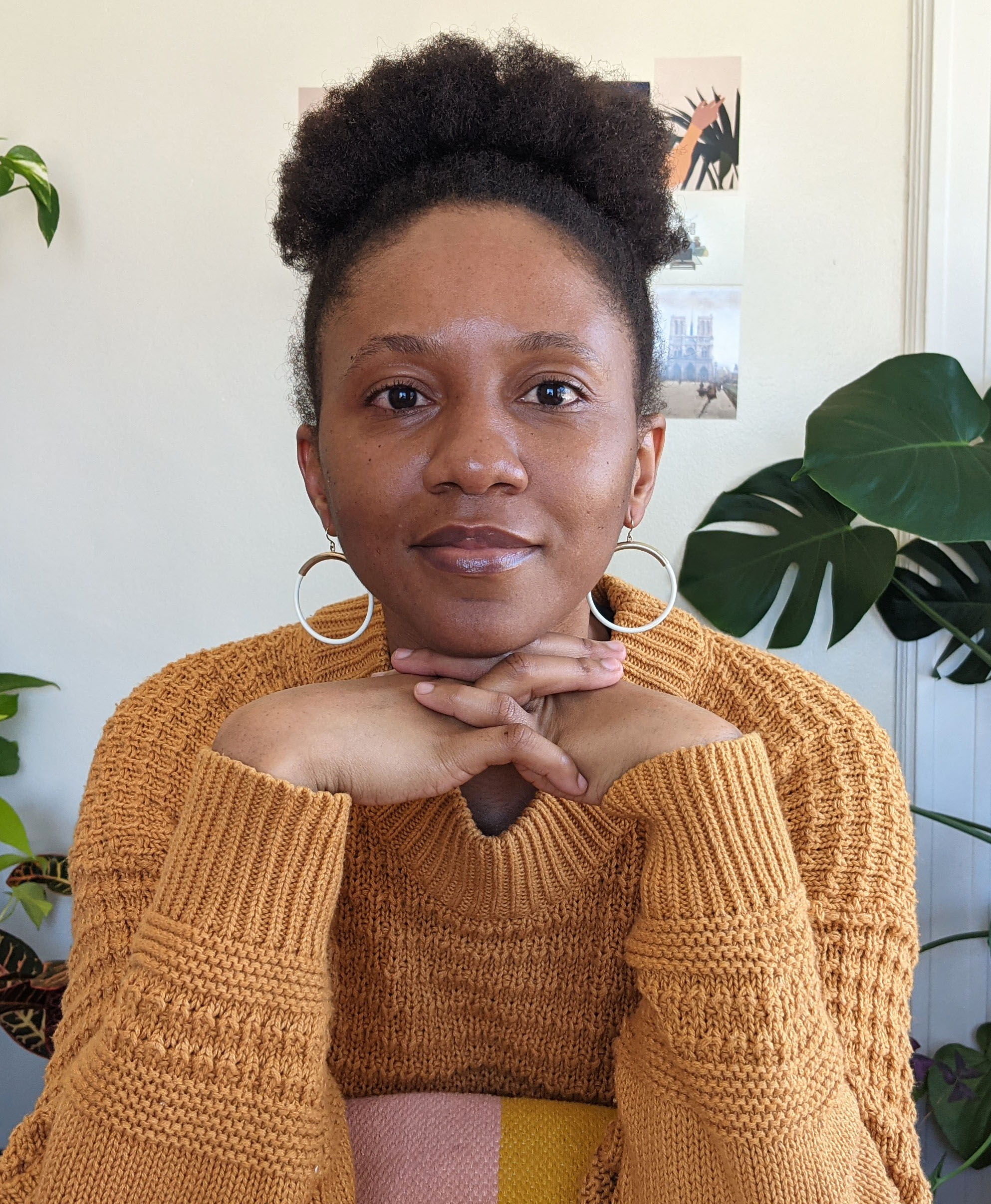
Uche Okonkwo’s stories have been published in A Public Space, One Story, the Kenyon Review, Ploughshares, The Best American Nonrequired Reading 2019, and Lagos Noir, among others. She is the author of the debut story collection A Kind of Madness: Tin House (2024); Narrative Landscape (2024); and VERVE Books (2025). A former Bernard O’Keefe Scholar at Bread Loaf Writers’ Conference and resident at Art Omi, she is a recipient of the George Bennett Fellowship at Phillips Exeter Academy, a Steinbeck Fellowship, and an Elizabeth George Foundation grant. Okonkwo grew up in Lagos, Nigeria, and is currently pursuing a creative writing PhD at the University of Nebraska-Lincoln.
Photo credit: Chris Cox, courtesy Caine Prize.
Catch up with the writer’s perspective on ‘Animals’ , and more besides, with Uche’s Words On / Caine Prize 2024 Shortlist Q&A, out last week.
Read ‘Animals’, along with all the stories shortlisted for 2024, via the Caine Prize website, or by clicking direct on ‘Shortlist…The Stories’ image below.

For more on the 2024 shortlist and the changes to the format of the Prize, looking ahead to its anniversary edition in 2025, visit: https://www.caineprize.com/.


All our ‘Words On / Caine Prize’ 2024 Shortlist Q&As
– find them, with all our coverage so far, here…
With thanks to all our Caine Prize 2024 Shortlist story reviewers this week; and special thanks to Wesley Macheso; and congrats to all those shortlisted for the 2024 Prize.
Categories: Reviews & Spotlights on...
Related Articles
-
 Spotlight on… Step back and step aside: Rereading Caroline Rooney on animism and African literature, a quarter of a century later
-
 Spotlight on… Fanny’s D’Or: Voice Against Blade
-
 Q&A: Spotlight Interview with Ellah Wakatama, Chair of the Caine Prize for African Writing
-
 Review: Nadia Davids’ ‘Bridling’ (on the Caine Prize Shortlist 2024)
 africainwords.com
join the discussion: