
With AiW Guest: Gerald Maa, editor and director of The Georgia Review.

Today, our final Writer-Publisher ‘Words on / Caine Prize’ Q&As, part of our now annual, AiW Caine Prize series, is with publisher Gerald Maa of The Georgia Review (GR), the magazine that featured Nadia Davids’ 2024 shortlisted story, ‘Bridling’, and whose “twinned” Q&A is also out on our site today.
Read Nadia’s responses, along with those from all our Q&A sets in this series – writers, publishers, and the Chair of the Judges – here.
NB: We spoke to all our interviewees in the ‘Words On / Caine Prize’ 2024 Shortlist Q&As before the winner was announced on September 17. But the winner is… Nadia Davids!
AiW: Many thanks for agreeing to speak with us and open up these often less visible roles in the outcomes of a literary prize, Gerald, and on behalf of The Georgia Review. Here at AiW, we believe these routes are particularly important in the broader literary ecosystems of the circulation and valuation of African writing, and are grateful to have your thoughts.
As its publisher, could you tell us about your journey of/with ‘Bridling’, Nadia Davids’ 2024 Caine Prize shortlisted story, your “story of the story”, so to speak? How did it come to you? What made you “see” it, initially, for the magazine, and as a Caine Prize story?
Gerald Maa, The Georgia Review: The second I read “Bridling,” I knew I had to have it. From the first sentence, it is a gripping story. Yes, the bridling is, in part, to strap the reader in, and this literary move, deftly done, implicates the reader into the drama of the piece, which is more than an exhibitionist flourish, because the story stages, ponders, and works through the possibilities and limitations of immersive theater for feminist liberation. Although it might seem far afield, I immediately thought about these short stories by Samuel Beckett that I love—consummately literary (that is, written) short stories driven by a playwright’s sensibility.
In a Prize noted for its “firsts”, it’s noticeable that this year, all the Caine Prize stories on the shortlist have been first published in, and so submitted to the Prize, by literary magazines founded and based in the US — all with a strong online presence and subsequent breadth of reach. Could you perhaps comment on that for us by telling us a bit more about your work with African writing, how it fits into your broader remit and your experience of publishing as a literary magazine?
We here at the Georgia Review take the “review” part of our name very seriously. Thanks to the generous support of the University of Georgia, our institutional home, I am blessed—we say here—with a staff large enough for each of our 10,000 submissions to be read by an expert in a salaried position. Because of this, the editorial conversations here are driven first and foremost by the abundance of rich work pouring in. I personally am committed to the effort to making the Anglophone readership more global, but our success in publishing literature from Africa also relies on the immense quality and quantity of African writers and translators reaching us. Since I’ve been here we’ve published works originally in English and in translation by established writers like Samira Negrouche, Alain Mabanckou, Olufemi Terry, and Nadia Davids, as well as emerging writers like Samuel Kolawole, Saddiq Dzukogi, and Munachim Amah.
Even when we focus momentarily on our locale, there is ample opportunity to engage and honor the influence of African arts and letters. There is of course the important presence of African diasporas in the American South, and in Atlanta, in particular. One of the winners of our emerging writer contest for diasporic writers is Sadia Hassan, an immensely talented Somali-American writer. The University of Georgia in general is growing its commitment to African literature. Alex Fyfe is doing amazing work here, and we just recently hired Chigozie Obioma.
Looking to you as a reader, is there a serendipitous or interesting, perhaps even uncanny, book / text related thing that’s happened to you? Perhaps a happy, weird accident that has occurred around books or writing that you can share with us; or a strange, significant – outrageous, even – thing you have done, or would do, because of, or for a book (text / story / piece of writing)?
Everything that has happened to me by way of a book/text has felt uncanny. One of my mentors pointed out to me that one of the implicit arguments in Freud’s uncanny essay is that literature is nothing but a machine to produce the uncanny. Freud starts by pointing out the extreme rarity of uncanny experiences, but then everywhere he looks in that Hoffmann short story—and it is short—there is the uncanny. I believe him.
What are the most ethical and/or heart-lifting changes in practice you’ve seen happening across your industry/industries recently? What would you like to see become more visible and celebrated going forward (jobs, roles, avenues, practices)?
The growing prominence of translation. Yesterday I had these pitch sessions at the annual conference for the American Literary Translators Association, which I personally think is the raddest conference out there. For me, translation is where it’s at, not only in terms of making the literary marketplace more global, but also intellectually, aesthetically, and in terms of where people are coming from. The inherently collaborative spirit of translation manifests itself in so many and varied ways.
What would you say is the best investment you’ve made in your professional self / selves, and/or the most valued advice you’ve received about navigating your industry (or industries)?
Friends, community, strong collegial relationships. Not so much in terms of getting opportunities, as of having the emotional support to dream large, work hard, and strive for collective ends.
Finally, how can our blog, books, reading, and online communities best offer support for your work with African writing?
Keep on doing what you’re doing. Thanks!
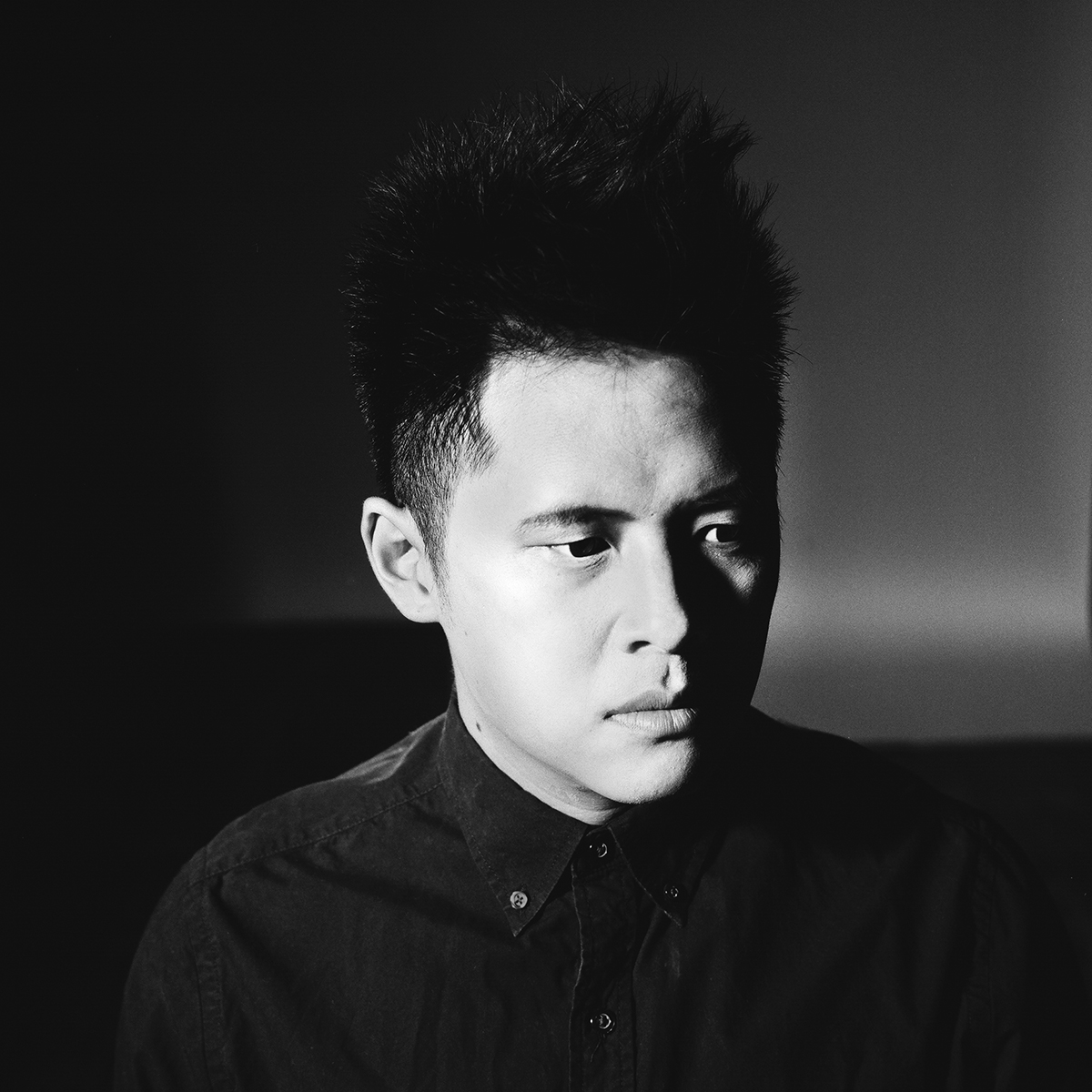
Gerald Maa is the editor and director of The Georgia Review (GR). Since he started with the magazine in 2019, GR has won the Pulitzer Prize, the Caine Prize, the National Magazine Award (once for fiction and once for profile writing), and the PEN/Dau Short Story Prize for Emerging Writers, among other awards. In 2009, he started The Asian American Literary Review with Lawrence-Minh Bùi Davis, an arts anti-profit that publishes the only print journal dedicated to writing from and/or about Asian Americans, where he served as founding editor-in-chief until he joined GR.
The Georgia Review is the literary-cultural journal published out of the University of Georgia since 1947. While it began with a regional commitment, its scope has grown to include readers and writers throughout the U.S. and the world, who are brought together through the print journal as well as live programming. Convinced that communities thrive when built on dialogue that honors the difference between any two interlocutors, we publish imaginative work that challenges us to reconsider any line, distinction, or thought in danger of becoming too rigid or neat, so that our readers can continue the conversations in their own lives.
Catch Nadia Davids’ twinned Q&A to Gerald’s (hearing the As from the other side of the desk, as it were), here, with links to more of our Caine Prize 2024 Shortlist series published so far.
And read ‘Bridling’, Nadia’s 2024 Caine Prize winning story, with all those shortlisted in 2024, via the Caine Prize website, or by clicking direct on ‘Shortlist…The Stories’ image below.
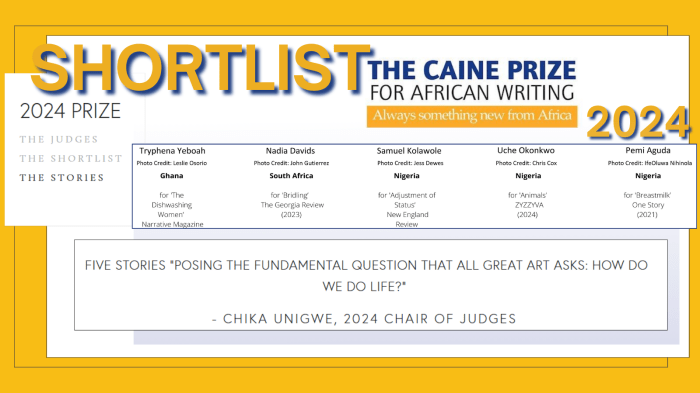
For more on the 2024 shortlist and the changes to the format of the Prize, looking ahead to its anniversary edition in 2025, visit: https://www.caineprize.com/.


With congrats and thanks to all our Q&A Caine Prize Shortlist 2024 participants; our reviewers; and special thanks to Ajoke Bodunde and Ellah Wakatama at the Caine Prize.
Categories: Conversations with - interview, dialogue, Q&A
 Q&A: Words on… Noisy Streetss’ ‘Love in Detty December’ anthology, III
  Words on… Maik Nwosu: A Voice above the fray (Q&A)
  Q&A: Spotlight Interview with Ellah Wakatama, Chair of the Caine Prize for African Writing
 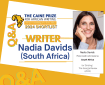 Q&As: Nadia Davids’ ‘Bridling’ – on the Caine Prize Shortlist 2024
  africainwords.com
join the discussion: