
With AiW Guest: ‘Pemi Aguda.
AiW note: We’re continuing with a new series of ‘Words On’ Caine Prize Q&As, today featuring the first of our “twinned” sets with two writers whose stories were shortlisted for the 2024 Caine Prize, here with ‘Pemi Aguda, whose twin Q&A set is with Uche Okonkwo.
Yesterday, we put the ‘Words On / Caine Prize’ 2024 Q&A set to the Chair of the Judges, Chika Unigwe. You can find it, with more of our Caine Prize coverage so far, here.
As with our previous coverage of the Prize, we spoke to our interviewees before the winner was announced on September 17th.

AiW: Congratulations on being shortlisted for the 2024 Caine Prize for African Writing, ‘Pemi. Thank you for your story, ‘Breastmilk’, and for talking with us.
Could we open with a bit about some of the “other lives” or pre-lives of your Caine Prize shortlisted story, perhaps something that our readers might not yet know (or that they should, or need to know) about it?
‘Pemi Aguda: I attended a lecture by the anthropologist Ruth Behar sometime in 2018 in which she discussed some of her travels. She told a story of meeting a woman in a village—in Cuba, maybe—who told of her five children dying because there was too much rage in her breastmilk. That image lingered inside me, and became the entry into ‘Breastmilk’. At the time, I was also paying attention to the feminism discourses on Nigerian Twitter, and wanted to write into how these might show up in an embodied and visceral way in a woman’s home.
Could you tell us a bit about your (other) work — your own writing and/or other kinds of work, roles, or the more general and different sorts of professional hats you wear – and how it might play out in terms of your involvement with short story writing from the continent?
I do editorial work right now with Transition Magazine, which focuses on Africa and the diaspora. I love a story that might be rough at meeting, but which excites me to roll up my sleeves and sink into thinking—what is excellent here? What can be made excellent here? The collaborative process of editing has been very illuminating to me as a writer myself. I find that intense rounds of editing with a good editor can be equated to a whole semester in writing school. I hope to be that good someday. I also love the vantage that editing allows me: to read stories from across the continent, which inspires excitement for what’s coming from our fiction landscape.
Looking to you as a reader, is there a serendipitous or interesting, perhaps even uncanny, book / text related thing that’s happened to you? Perhaps a happy, weird accident that has occurred around books or writing that you can share with us; or a strange, significant – outrageous, even – thing you have done, or would do, because of, or for a book (text / story / piece of writing)?
This happens so often that I don’t know if qualifies as serendipity anymore: I might be discussing a very niche subject with a friend that then randomly shows up in a book I’m reading the next day. I always think, what are the odds? This might be explained by confirmation bias, but I like to think of them as magical coincidences sparking across my life.
What are the most ethical and/or heart-lifting changes in practice you’ve seen happening across your industry/industries recently? What would you like to see become more visible and celebrated going forward (jobs, roles, avenues, practices)?
I’m always excited to see collaborations across genres and disciplines, and I would love to see more of these widened to an inter-generational level. Newer artists in conversation with the veterans—what might emerge from such time-expansive communion?
What would you say is the best investment you’ve made in your professional self / selves, and/or the most valued advice you’ve received about navigating your industry (or industries)?
It could be the time I took time away from a strict boss during NYSC to attend my first writing workshop in 2011; it could be the three years devoted to an MFA program; but it probably is all the time I’ve spent reading widely, and discussing books and art with creative friends.
Finally, how can our blog, books, reading, and online communities best offer support for your work in African writing?
Thanks for that question. If you like something I’ve written, please tell someone else. This seemingly small generosity is how I’ve discovered many delightful things.
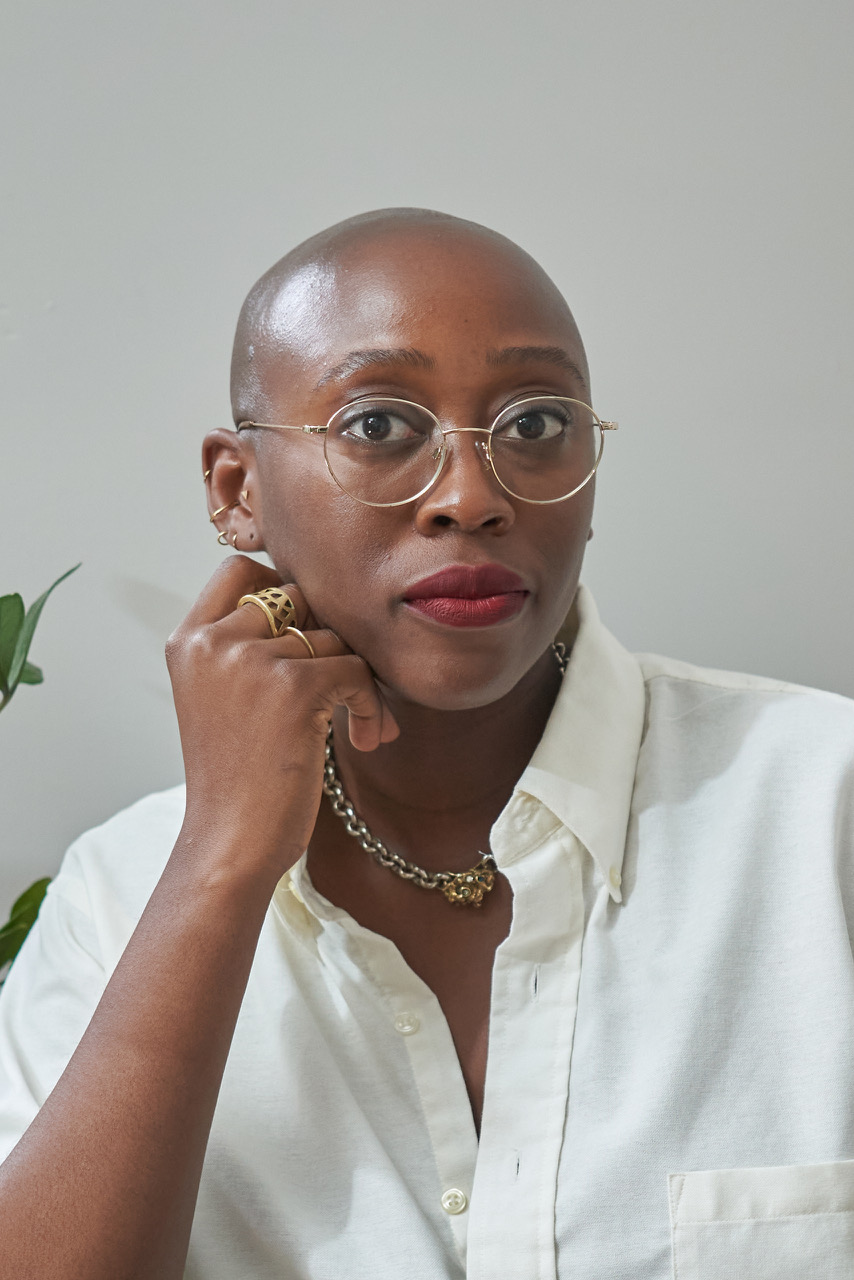
‘Pemi Aguda is an MFA graduate from the Helen Zell Writers’ Program at the University of Michigan and the winner of the 2020 Deborah Rogers Foundation Award. Her writing has been published in One Story, Granta, Ploughshares, American Short Fiction, Zoetrope, and other publications, and has been awarded the O. Henry Prize for short fiction in 2022 and 2023. She is the author of a collection of stories, Ghostroots (W.W. Norton, 2024; Virago Press, 2024; and Masobe Books, 2024). Pemi is from Lagos, Nigeria.
Today’s twinned Caine Prize Shortlist Words On… Q&A is with fellow shortlistee, Uche Okonkwo (Nigeria), for her story, ‘Animals’ – you can link to it via our homepage, or, with more of our Caine Prize coverage here now.
NB: Uche and ‘Pemi’s interviews today will be followed each day through the week with sets of twinned As to the same range of ‘Words On’ Qs from the shortlisted writers, and, continuing our attention to the publication routes of African literary production, their publishers — watch this space.
Read ‘Breastmilk’ and ‘Animals’, along with all the stories shortlisted for 2024, via the Caine Prize website, or by clicking direct on ‘Shortlist…The Stories’ image below.

For more on the 2024 shortlist and the changes to the format of the Prize, looking ahead to its anniversary edition in 2025, visit: https://www.caineprize.com/.
With congrats and thanks to all our Q&A Caine Prize Shortlist 2024 participants; our reviewers; and special thanks to Ajoke Bodunde and Ellah Wakatama at the Caine Prize.
Categories: Conversations with - interview, dialogue, Q&A, Words on the Times...
 Q&As: Uche Okonkwo’s ‘Animals’ – on the Caine Prize Shortlist 2024
  Q&As: Chika Unigwe, Chair of the Judging Panel – the Caine Prize Shortlist 2024
  Q&As: Mame Bougouma Diene and Woppa Diallo – Caine Prize shortlist 2023 – winners
  Q&As: Jendella Benson – Judging the Caine Prize 2023
  africainwords.com
join the discussion: