With AiW Guests, SCOLMA committee members:Ben Carson, Liz Haines, Jenni Skinner, and Charles Fonge.
SCOLMA is the UK Libraries and Archives Group on Africa.
AiW exchanged our Words On… Q&A with SCOLMA committee members on the launch of their recent video series on YouTube, ‘African Studies in the Digital Age’, recordings of their online seminar season held this year between January and April; and with information about the call for papers for their upcoming conference in 2025 (see below for more details)...
AiW: Perhaps we could start with a bit of a picture around the specifics, some background, inspiration, significance – namely, why this, why now? Please tell us anything you’d like that will fill out that picture. Are there any pre-lives that our readers might want to, or should, know about? Any particular challenges, joys, or unexpecteds specific to this experience that you could share with us?
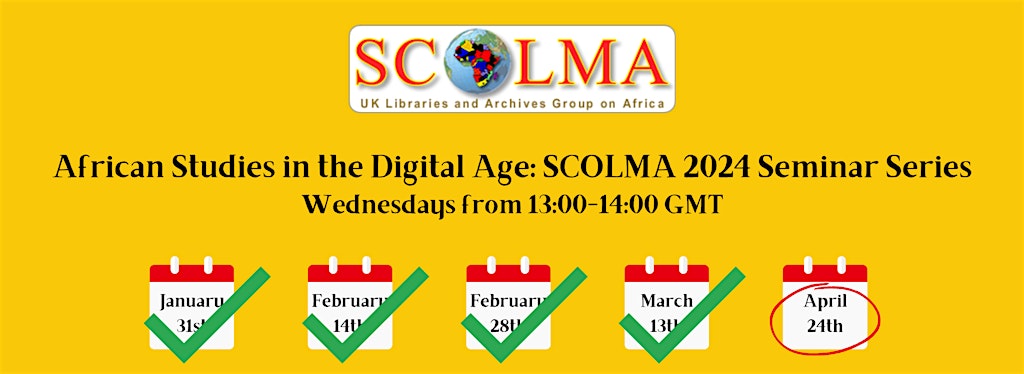
SCOLMA: SCOLMA is the UK Libraries and Archives Group on Africa, a forum that brings together those who work with collections of African Studies materials in libraries and archives in the United Kingdom. This spring we embarked on a new project, an online seminar season. This season had five roundtable sessions exploring the topic ‘African Studies in the Digital Age’.
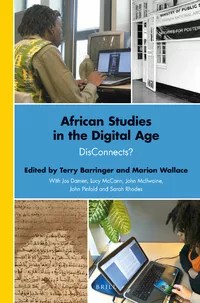
This revisited a theme that had been the focus of SCOLMA work, and particularly a publication, ten years ago. That publication African Studies in the Digital Age: DisConnects?had generated important reflections on the impact that digital technologies were having on collections, collections access and collections use in the early 2010s.
In 2023 SCOLMA had been rethinking its practice of holding an annual conference, and we decided to alternate a biennial conference with an online seminar season. This in itself is reflective of some of the changes in the ways in which academic and professional communities are communicating and sharing knowledge in the ‘Digital Age’! So revisiting the question of ‘the digital’ as the theme for the seminars seemed like a good place to start this new venture.
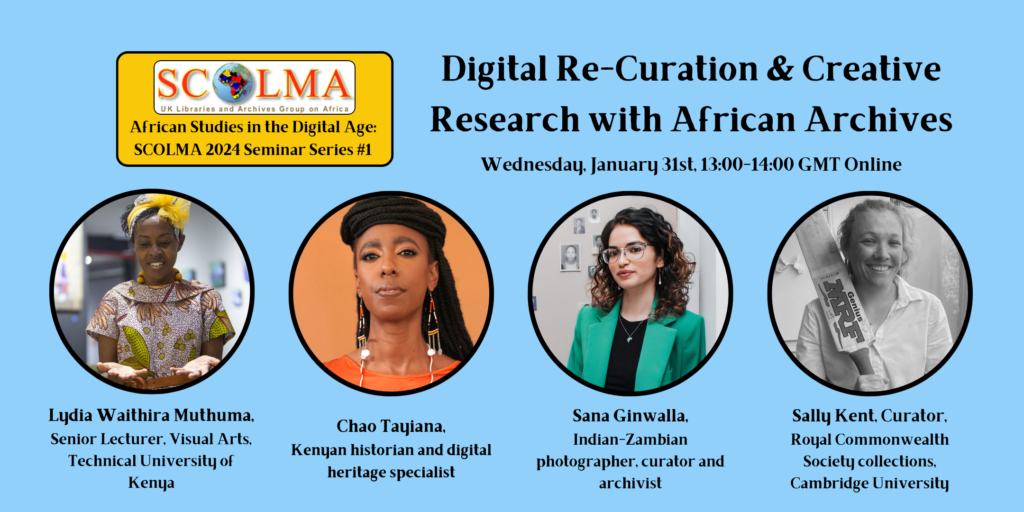
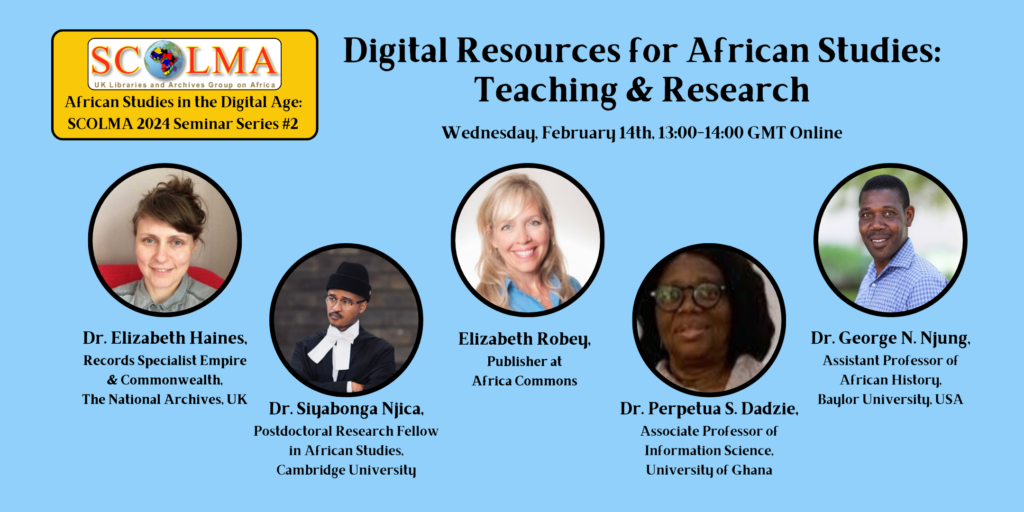
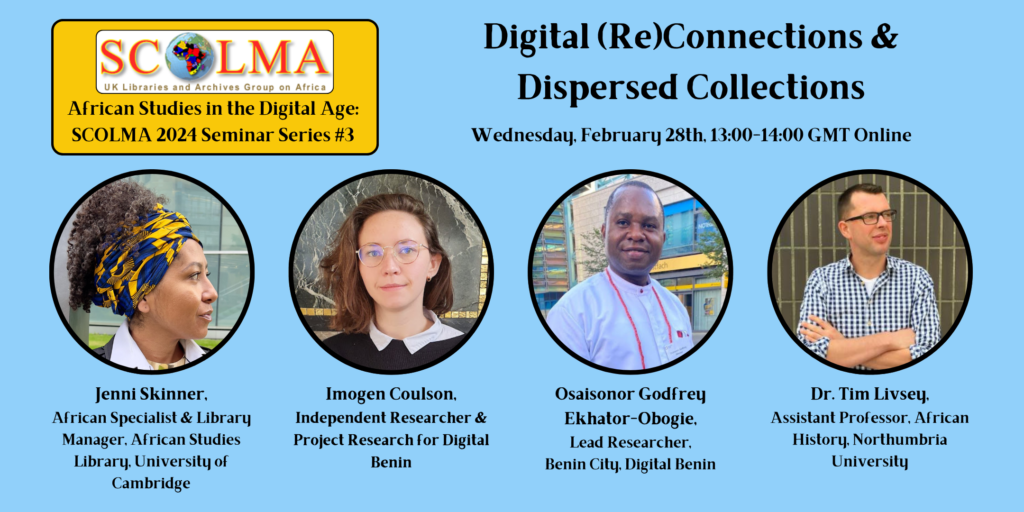
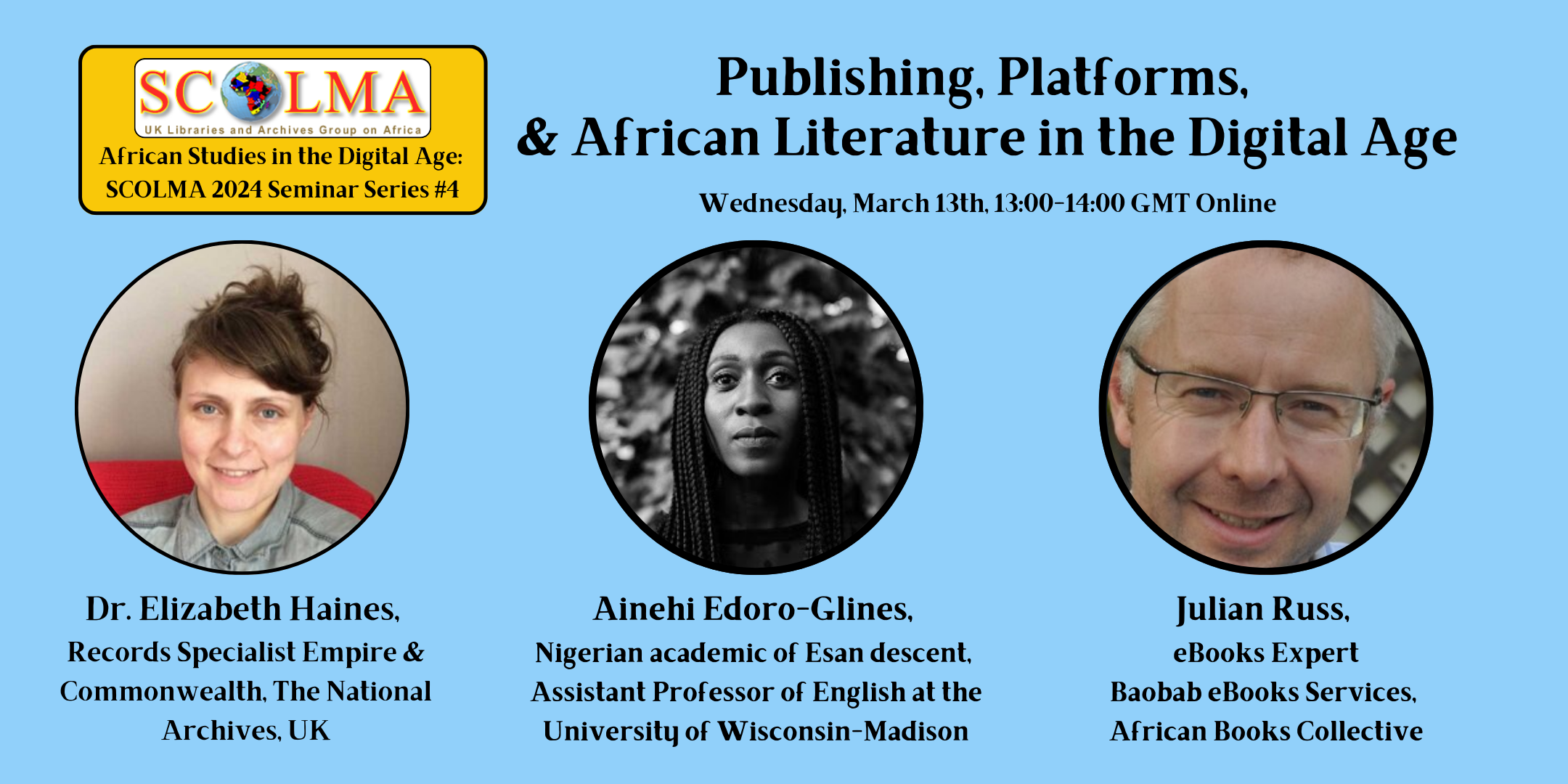
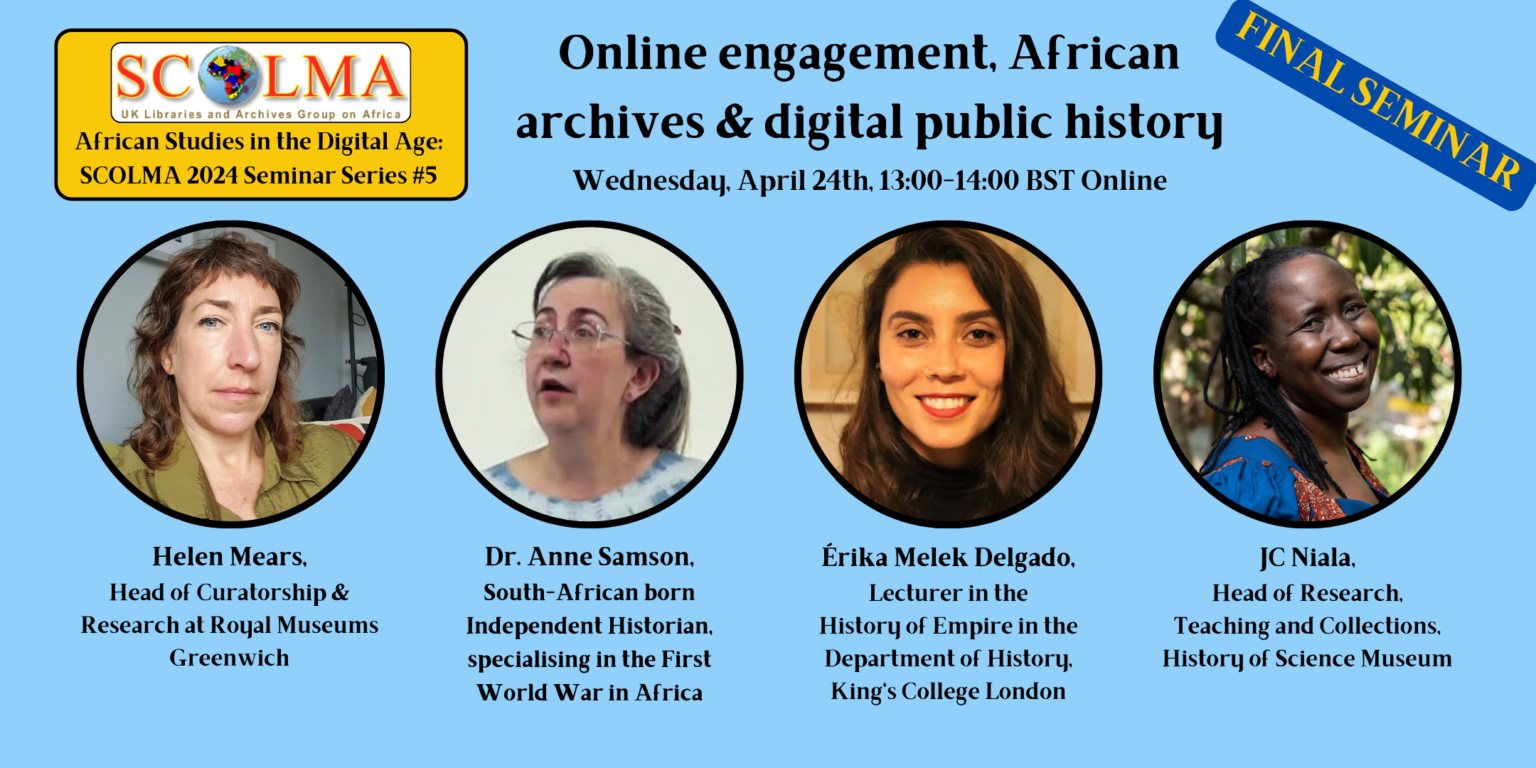
A team of SCOLMA committee members, Ben Carson (Centre of African Studies, Cambridge), Liz Haines (The National Archives, UK), Charles Fonge (University of York) and Jenni Skinner (SCOLMA Chair, Centre of African Studies, Cambridge) began putting together a programme and format that we hoped would do that work of communicating and knowledge sharing: a series of roundtable events on five different themes: creative engagement with digital collections, digital collections for teaching, digitally (re)connecting dispersed collections, digital publishing of African writing, and digital ‘public history’.
The series ran from January to April 2024. It really doesn’t feel fair to pick out examples because we had a roster of such generous, interesting panellists! But perhaps to give a flavour, our guest list included some names that are probably familiar to AiW readers, Professor Ainehi Edoro-Glines talking about the work of Brittle Paper, and Julian Russ talking about the creation of the e-book platform for African Books Collectivefor example. It also included reflections on digital access to rare print material from Southern Africa via Africa Commonsfrom Dr Siyabonga Njica (University of Cambridge), and a project by Dr Tim Livesey (University of Northumberland) that provided access for Nigerian scholars to material in the UK ‘Migrated Archives’ but there were so many more fantastic speakers and projects with contributions from museum curators, digital humanities specialists, photographers and filmmakers, independent researchers, and publishers and many people who wear lots of different hats at once.
The discussions provided the opportunity to get new perspectives and insights on questions that can feel quite constrained in our institutional contexts. It was also really exciting to see something that we hadn’t really anticipated, which was the amount of networking and sharing that went on in parallel to the seminars via the ‘chat’. We had a very generous and supportive audience, and I think it was a positive surprise to see how much this way of working could recover some of the informal conversations of in-person meetings.
We are looking forward to those multi-directional networks extending further as all the seminars are now available online on YouTube (@SCOLMA).
Could you let us in to a bit about your (other) work — with African cultural production and/or the more general and different sorts of roles and professional hats you wear, and how they might feed into each other, as well as what you are focused on now?
SCOLMA’s publication outlet for our conference and seminar speakers is its journal, Africa Bibliography, Research and Documentation (ABRD). Launched in 2022, it brings together Africa Bibliography, the authoritative guide to works in African studies published under the auspices of the International African Institute (IAI) since 1984, with SCOLMA’s former African Research & Documentation, published since 1973. Several contributors from our 2024 Seminar Series will pen articles for our January 2025 issue.
The public engagement work from our biennial conferences and seminar series is brought to life by SCOLMA’s diverse elected and executive committee members, who are staff in library, archive and engagement roles across the UK, including the University of York, University of East Anglia, King’s College London, Oxford, Cambridge, SOAS, The National Library of Scotland, The British Library, and the IAI. We are also active members of similar African Studies networks in the UK and Europe such as The African Studies Association UK (ASAUK), and European Librarians in African Studies (ELIAS).
With the recent push to decolonise higher education, the roles of those managing UK-based African Studies collections have changed from traditional reader services to include transformative cultural production projects that invite re-framing and re-interpretation of collections in so many ways. In higher education, African Studies has historically been a siloed discipline, so SCOLMA offers an avenue for our members to find like-minded peers. Digital technologies and the format of this 2024 Seminar Series has allowed us to cast our net wider. We have always championed the perspectives of academics and collections specialists from the continent and always had a diverse membership but this series has further developed SCOLMA’s network geographically and professionally.
Leading up to this point, this ‘now’, what is the most valued advice you’ve received about navigating your industry (or industries), and/or the best investment you’ve made in your professional self / selves?
Our professional selves are quite varied! Within the SCOLMA seminar team we’ve arrived at our current roles via different routes, roles and experiences. However, whether you’re working in relation to African collections as higher education professional services (where we are often working in either very small teams or are one person managing a collection), are a lone researcher, or involved in other kinds of freelance cultural production, isolation from peers, opportunities or other creatives can be a real challenge. So we’d advise that you join SCOLMA!
If you are looking for a great way to invest in yourself and are interested in connecting with us, you can follow us online for free, or you can join and become a member. We have concessionary membership rates for students, the retired or unwaged, and membership gives you direct access to our journal and the ability to participate in SCOLMA meetings and so engage more closely in our activities.
Being part of SCOLMA has helped all of us with professional growth and confidence. The contributions and discussion at the seminars really demonstrated the value of networking. Speakers reflected on their own creative and scholarly journeys. They also considered the different challenges and obstacles they faced, which might be technical or legal, or structural, for example in terms of hidden and suppressed narratives, power imbalances both visible and invisible, and colonial legacies. It can be a space to test ideas, discover shared interests and even build support for creating change by fostering new conversations or cultivating shared understanding.
Thinking towards the shifts and changes in connections in our experiences of working, making (and living) within the creative arts fields of late: what are the most ethical and/or heart-lifting changes in practice you’ve seen happening recently across your industry/industries, and/or otherwise in your working life? What would you like to see become more visible going forward (jobs, roles, avenues, practices)?
However, as our seminar participants often reflected at different moments, we are still very far off from equitable access to heritage, or equitable access to employment or decision-making in heritage. Although digital technologies are sometimes proposed as a compromise to physical repatriation they don’t eliminate the issues around the location of collections, access to travel expenses or visas. Physical collections are increasingly at risk, from lack of financing, from climate change, from lack of qualified staff, again, in the UK as well as on the African continent and beyond. The development of collection infrastructure such as catalogues or digital repositories is getting harder and harder to fund in the UK. This tension was already described in the 2014 book: the digital represents new possibilities for libraries and archives but those new possibilities can often extend the number of competing demands on the finite resources of heritage organisations as much as they can provide solutions.
It is widely recognised that we need radical thinking to address the precarious future of heritage and to realise the potential and complexity of repatriation projects. The good news is that digital technologies offer the opportunity for wider participation in solving them and provide the technical means for dialogues about the futures of African-related collections to be led by those on the continent.
Finally, how can we – that is, our blog, books, and online communities – best offer support for this work ongoing?
Join the discussion! SCOLMA is continually striving to enrich African studies in the UK and beyond, for those within and beyond academia, anyone interested in African history or decolonisation.
We are keen to co-host future seminar series with African-based groups. Please get in touch with us if you want to collaborate or have any questions about SCOLMA and help us spread the word about us by sharing our work with a friend or a colleague.
Become a SCOLMA member, get in touch, and follow us: – Twitter (X): Find links to our 2024 Seminar Series videos here and other updates about collections and events related to African Studies in and around the UK – YouTube: The full 2024 Seminar Series videos can be found on our YouTube channel – Eventbrite: Don’t miss a notification about our upcoming events – LinkedIn: Connect with SCOLMA members and those interested in African collections – You can also sign up to our mailing list – And email us: enquires@scolma.org
We have also launched our 2025 Conference call for papers: we hope that you’ll be able to join us and continue the conversation in Oxford this summer at the conference!
Through the generations: youth, ageing and African Studies collections – 30th June 2025, University of Oxford.
It is well known that the African continent has the youngest population in the world, and is sometimes described as the ‘continent of the future’. What impact does this have on the role of archives and libraries that document the continent’s past?
Please submit abstracts of up to 350 words and a one-paragraph biography to Sarah Rhodes: sarah.rhodes@bodleian.ox.ac.uk by Friday 17th January, 2025.
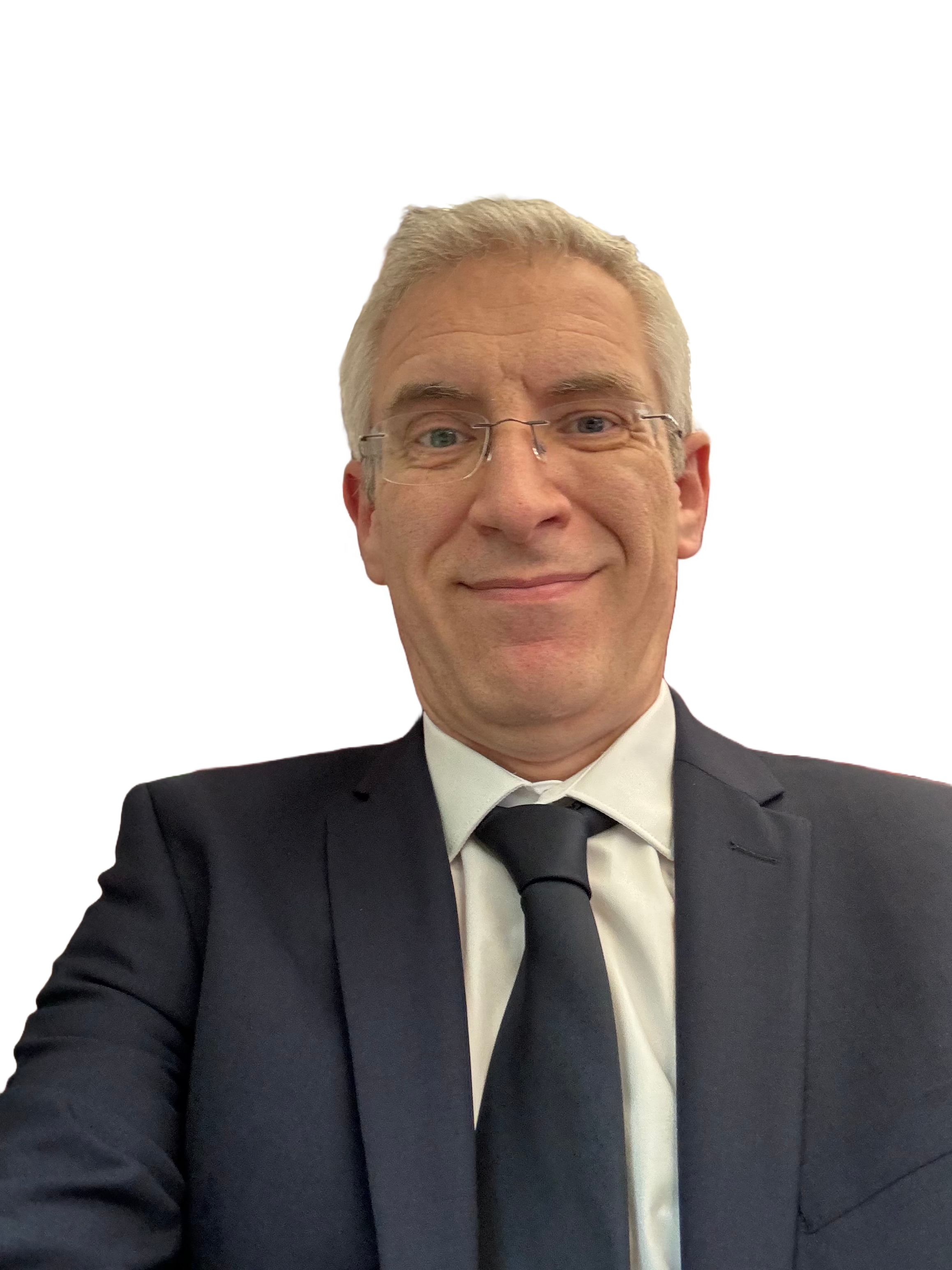
Ben Carson is an Elected Member and Brand Designer for SCOLMA and is the Senior Library Assistant in the Cambridge University African Studies Library. He enables students and researchers to access the Library’s material, especially the University’s MPhil African Studies students. He holds an MA in African Studies from SOAS, University of London where he wrote his dissertation about language attitudes in Lubumbashi, DRC, and how Swahili and French interact with one another in daily life.
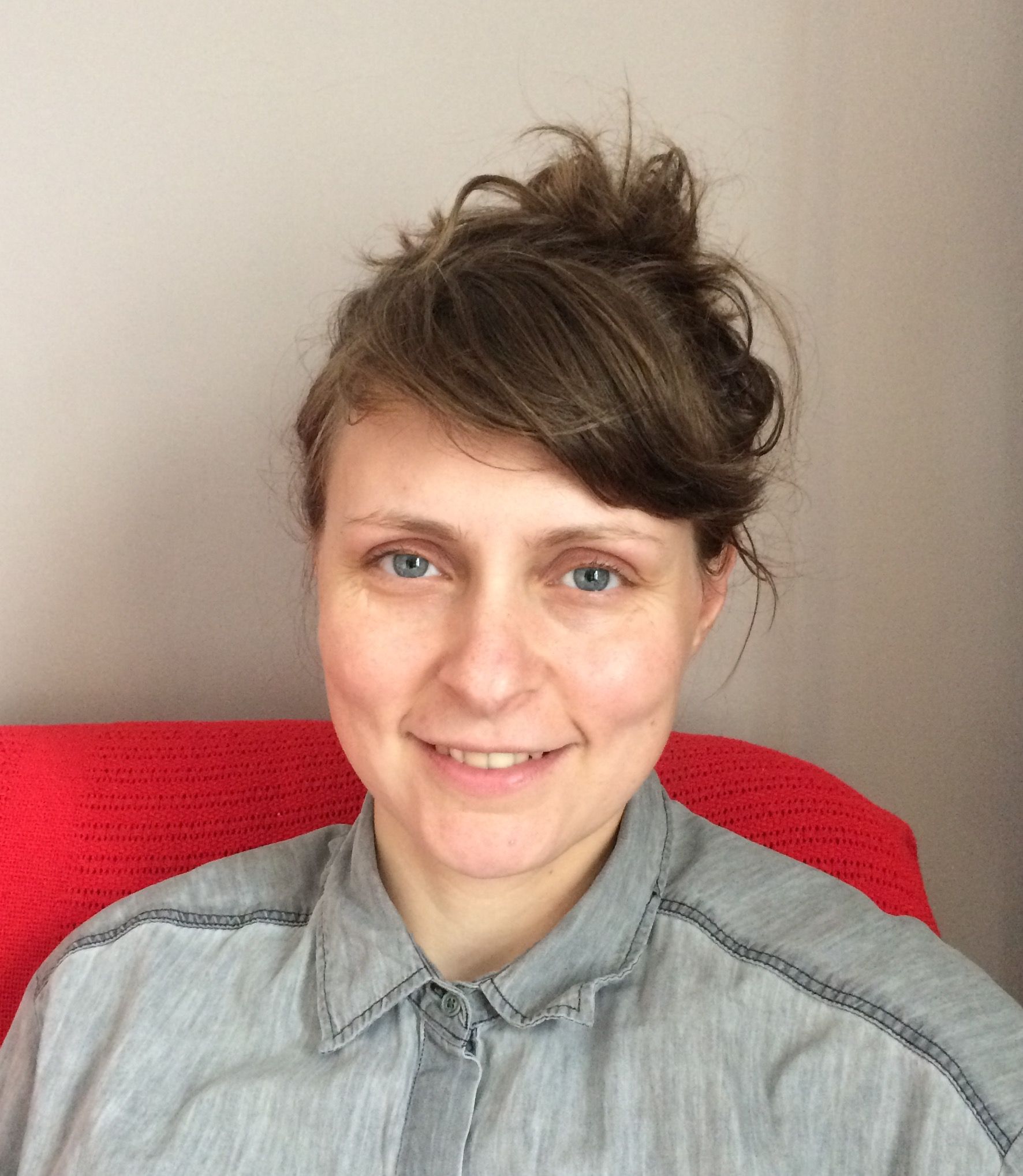
Liz Haines is Programme Secretary for SCOLMA and Principal Record Specialist in Empire and Commonwealth collections at The National Archives, UK. She approaches both roles with an interest in exploring the history of global processes through co-produced, creative research. Her PhD was a collaborative doctoral award in Historical Geography from Royal Holloway, University of London, and the Science Museum, exploring the role of mapping in colonial governance practices in Northern Rhodesia [Zambia]. Before joining the National Archives, Elizabeth was a Lecturer in Global History and Decolonisation, and Vice-Chancellor’s Fellow in History at the University of Bristol.
Jenni Skinner is the African Specialist and Library Manager of the African Studies Library, supporting the research and teaching needs of the University’s Undergraduate and Postgraduate study of Africa, as part of the World Collections Department at Cambridge University Library. Jenni is the current Chair of SCOLMA.
Charles Fonge is University Archivist and Records Manager at the Borthwick Institute for Archives at the University of York. He looks after the Borthwick’s collections relating to southern Africa, is a member of SCOLMA’s committee and provides support for all SCOLMA-related web content.



 Q&A / Calls for… Nozipho Wabatagore and ‘Queer Africa: Resilience and Hopeful Now’
  africainwords.com
join the discussion: