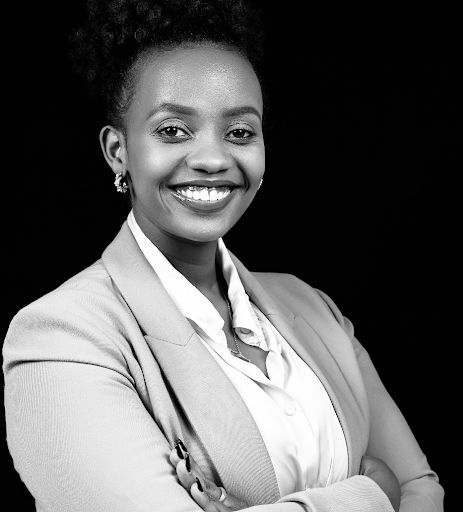
Kakizi Jemima is a multidisciplinary artist and curator. She has curated exhibitions in Rwanda and Switzerland, worked on art projects with UNICEF Rwanda, the Rwanda Art Museum, Girl Effect, Goethe Institute, and Creative Action Institute, and exhibited her work in Germany, South Korea, Kenya, and Tanzania.
Fierce Femmes, Jemima’s latest curated exhibition, is running now until July 4th at Gallery Brulhart, a gallery dedicated to promoting contemporary art by women of African descent in Geneva, Switzerland.
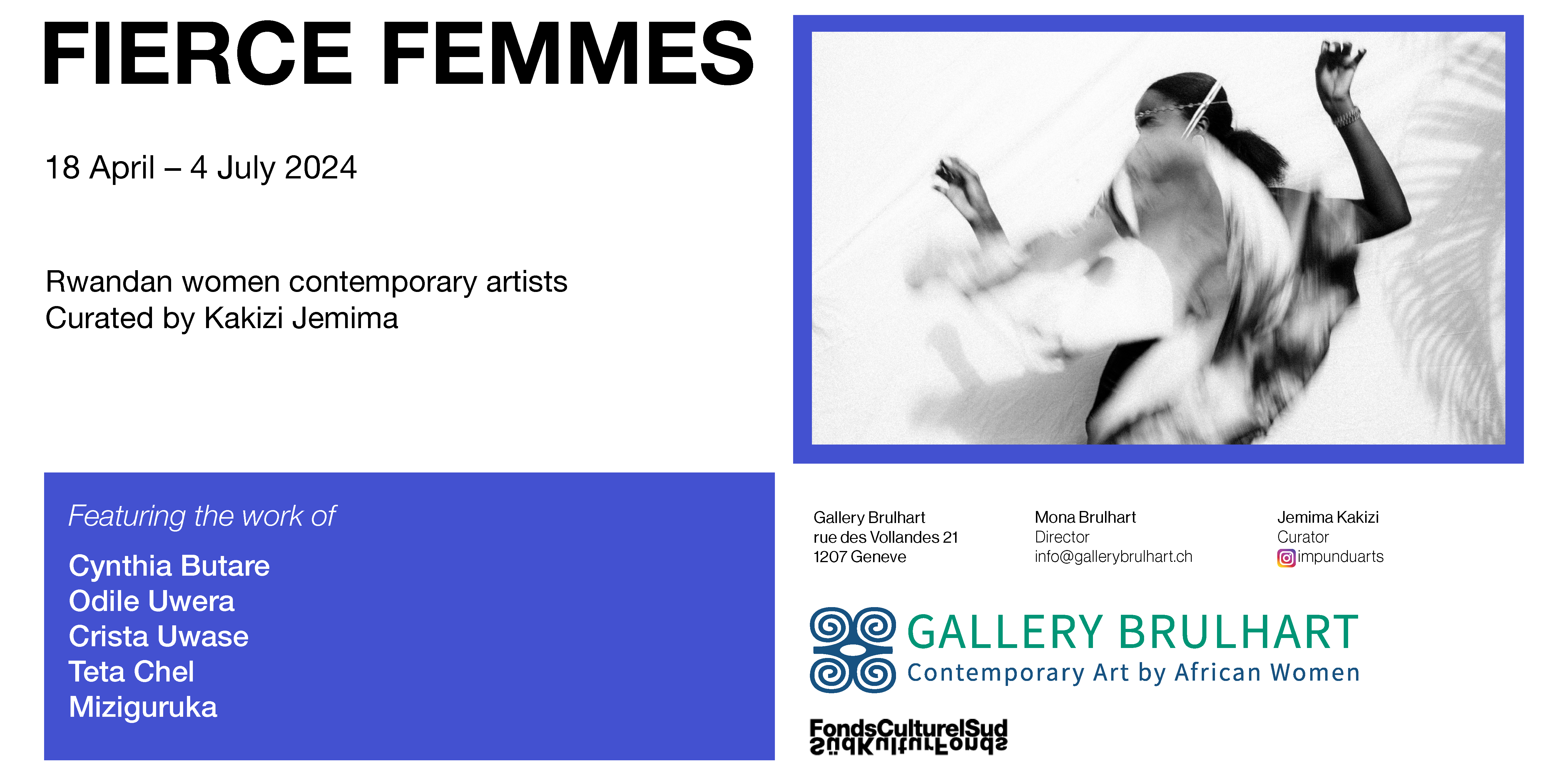
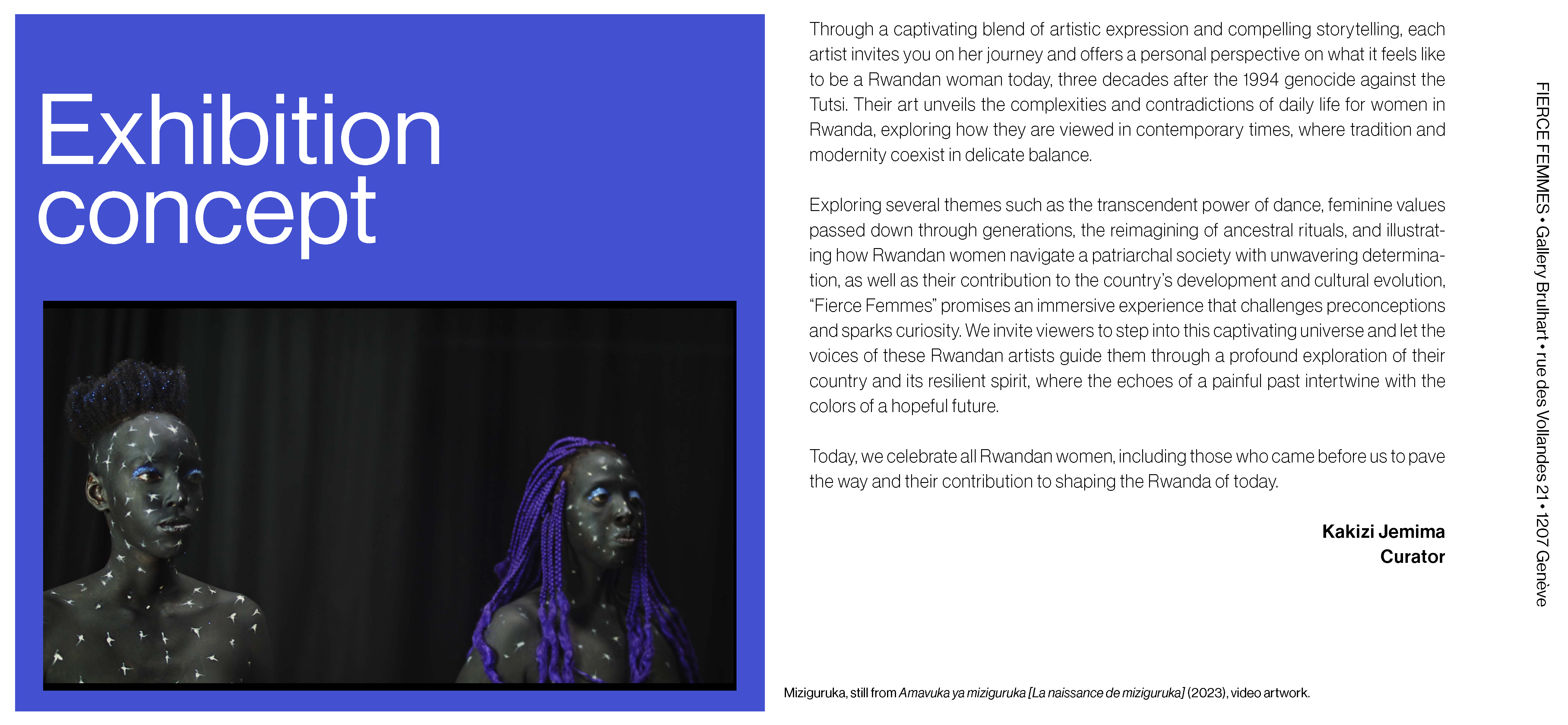
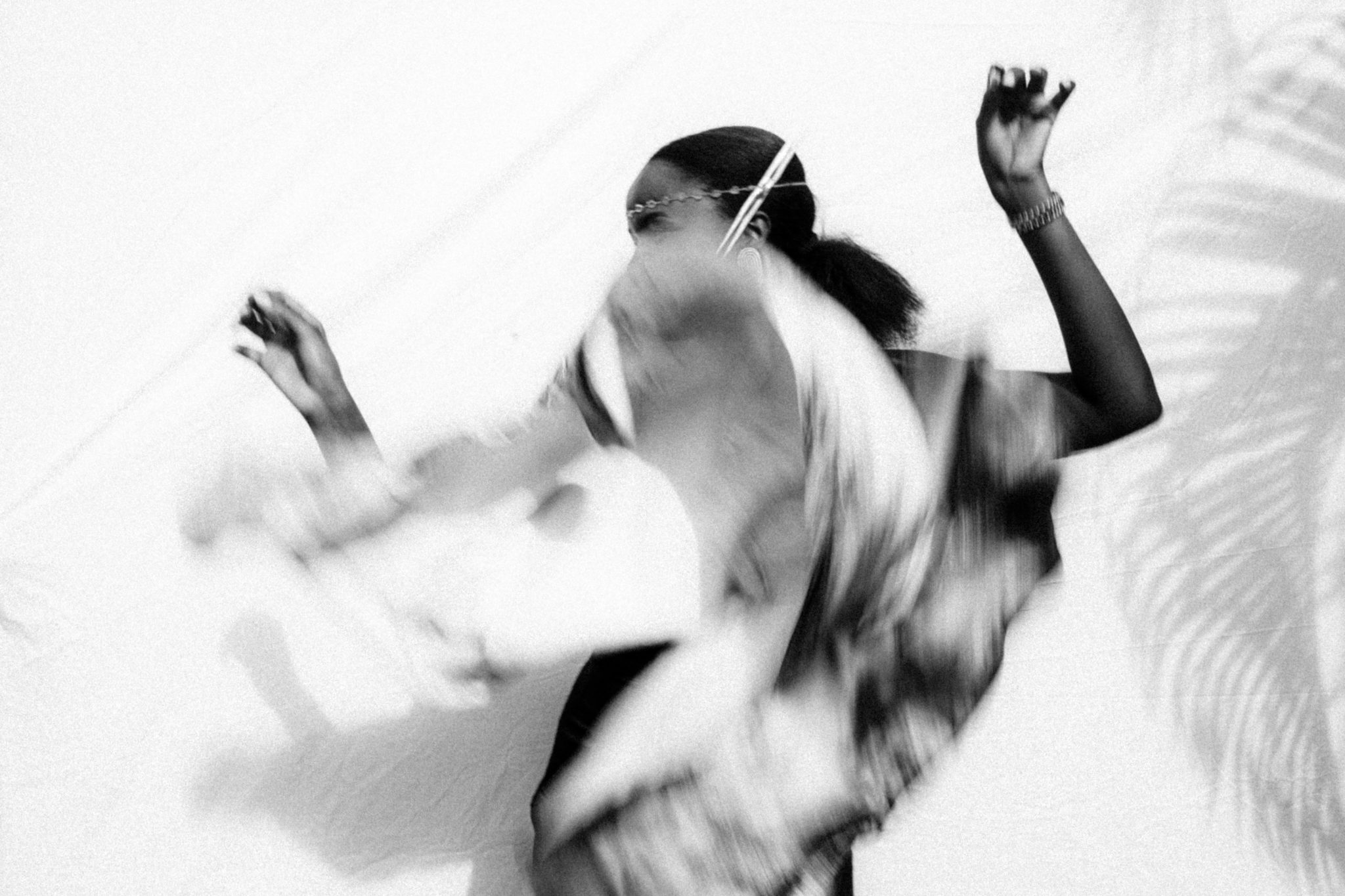
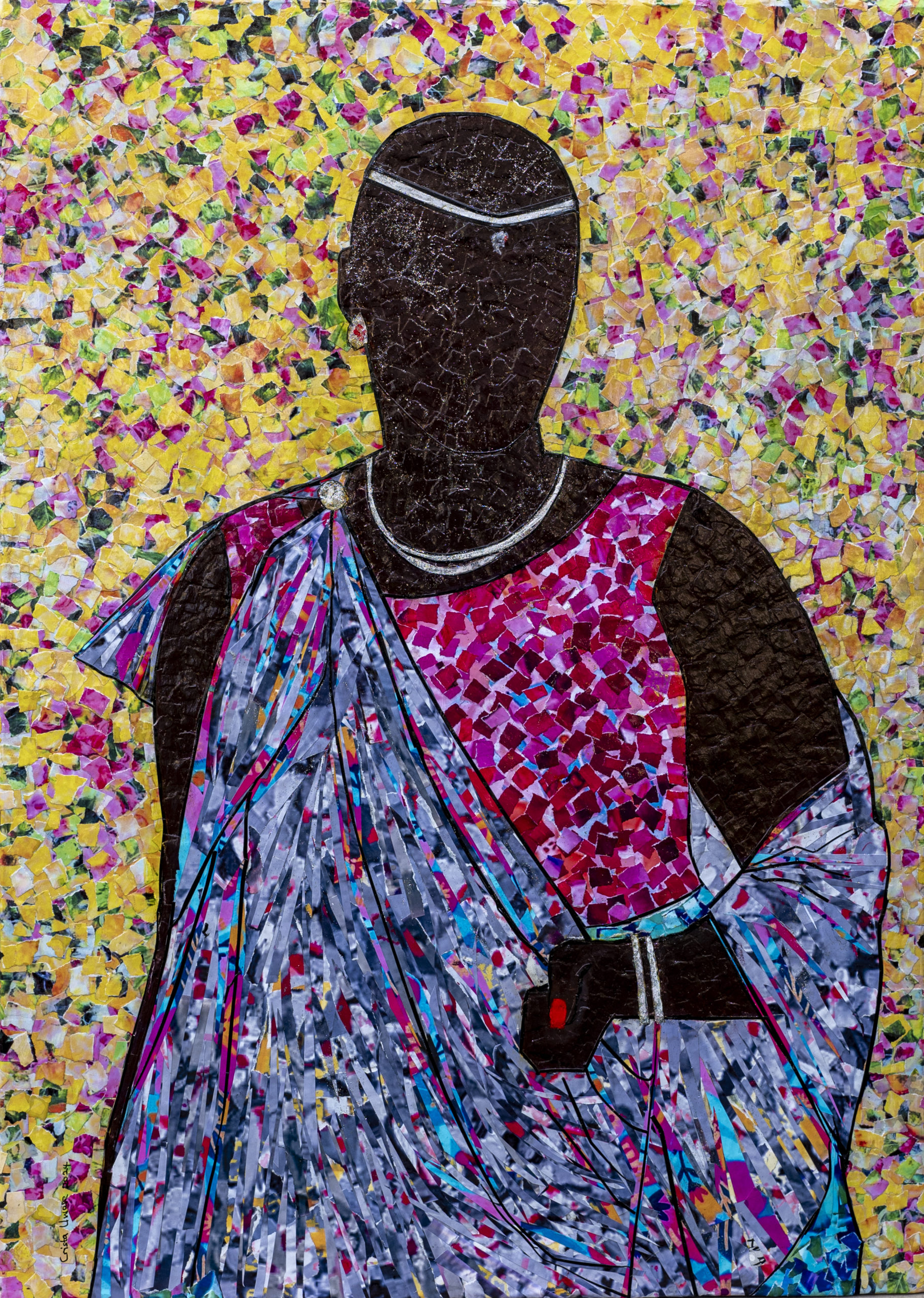
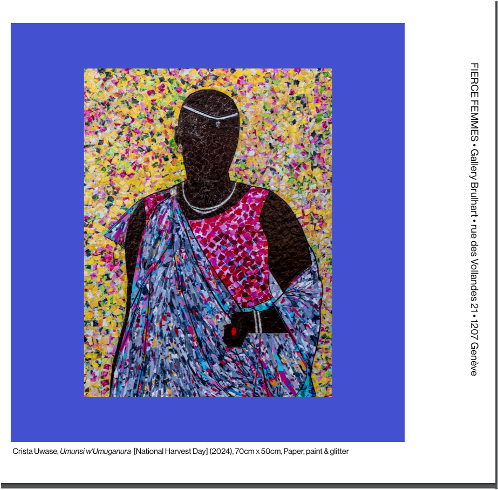
Featuring the photography, painting, digital drawing, collage, and video artwork of 5 Rwandan women artists — Cynthia Butare, Teta Chel, Odile Uwera, Crista Uwase, and Miziguruka — Fierce Femmes is an immersive visual arts exhibition that offers personal perspectives on the experience of being a Rwandan woman today, three decades after the 1994 genocide against the Tutsi.
In Kakizi Jemima’s concept for Fierce Femmes, the exhibition explores:
“several themes such as the transcendent power of dance, feminine values passed down through generations, the reimagining of ancestral rituals… illustrating how Rwandan women navigate a patriarchal society with unwavering determination, as well as their contribution to the country’s development and cultural evolution…”
The artists’ work unveils the complexities and contradictions of daily life for women in Rwanda, exploring how they are viewed in contemporary times, where tradition and modernity coexist in delicate balance, and where, in Jemima’s words, “the echoes of a painful past intertwine with the colors of a hopeful future”.
In this interview, Africa in Words’ Davina Philomena Kawuma talked with Jemima to discuss the establishment of and motivation behind Impundu Arts Center, curating Fierce Femmes, and the processes involved in translating the trauma of Rwanda’s genocide into a narrative.

Davina Philomena Kawuma, for Africa in Words: In your video for Imigani’s 30 for 30 series — a project which featured 30 Rwandan artists from different generations, marking the 30th commemoration of the Genocide against the Tutsi — you spoke about starting Impundu Arts Center in 2022, saying, “I was trying to find a solution for my art.”
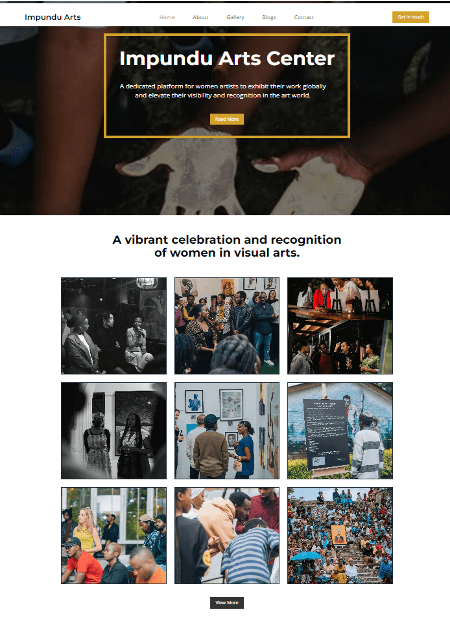
https://www.impunduartscenter.rw/
Could you elaborate on the specific challenges you were facing at that time, beyond the issue of a less inclusive visual arts scene? I’m thinking of this in terms of your practice as a multidisciplinary artist, the unique conceptual challenges you must encounter while trying to communicate your artistic vision across different disciplines, and the post-COVID-19 pandemic reductions in arts funding.
Kakizi Jemima: I started Impundu because I knew that, as women artists, we needed to come together and exhibit our work for people to see. This visibility creates opportunities for us. After COVID, funding for creatives became a problem. But even before COVID, I received little support from institutions. I would say that 80% of Impundu’s projects have been sponsored by me as an artist, with additional support coming from different creatives and art spaces in Kigali.
DPK: What was your initial experience with curating, and how do you navigate this role in an environment where ‘curate’ has become a buzzword, applied to everything from food festivals to playlists? How has curating changed your relationship with art?
JK: Curating changed a lot for me. I realized I had to learn many things I didn’t know as an artist, like coming up with a concept and selecting artists to work on it, how to organize a successful exhibition, networking, and understanding who I should know in the art world. I had to work hard, read extensively, and learn from other curators online because we don’t have many locally. It has been a game-changer. I don’t mind if others call themselves curators if they feel it matches the work they are doing. At the end of the day, what matters is what you do with your role, the message, the impact, and the quality of your work.
DPK: Could you tell us what you relied on for your curation of Fierce Femmes, from conception to execution of the idea?
JK: In Kigali, I was invited by Dr Ceri Chillier-Whatley and Gallery Brulhart to curate an exhibition around the theme, “What does it mean to be a Rwandan woman today?”. I developed this and conceptualized the idea of Fierce Femmes based on my observations of the world around me. I relied on the fact that, in the past 30 years, Rwanda has developed significantly, yet there are certain things women have done that were not celebrated. These contributions, while often considered small, are actually monumental and shape who we become as a society. I drew inspiration from this perspective and focused on highlighting the often-overlooked achievements of women.
DPK: How did you select the artists and art to feature in this exhibition?
JK: As an advocate for women artists, I wanted to ensure that I worked with a diverse group of women from my previous projects. I selected artists with different styles and techniques to represent a broad spectrum of female artistry. I particularly looked for women who work on subjects that align with the theme I wanted to explore in the exhibition. This diversity in artistic expression was crucial in portraying the varied and significant roles that women play in our society.
DPK: Is there a memorable moment or story from the exhibition that highlights the importance of making women’s art more visible?
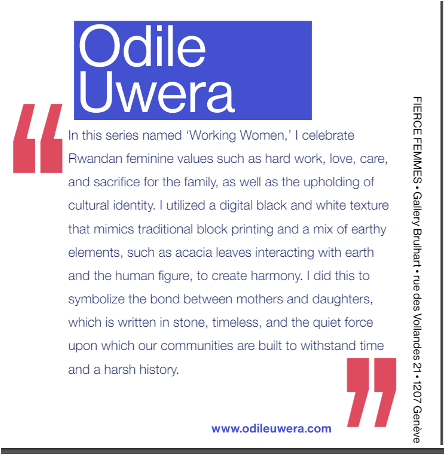
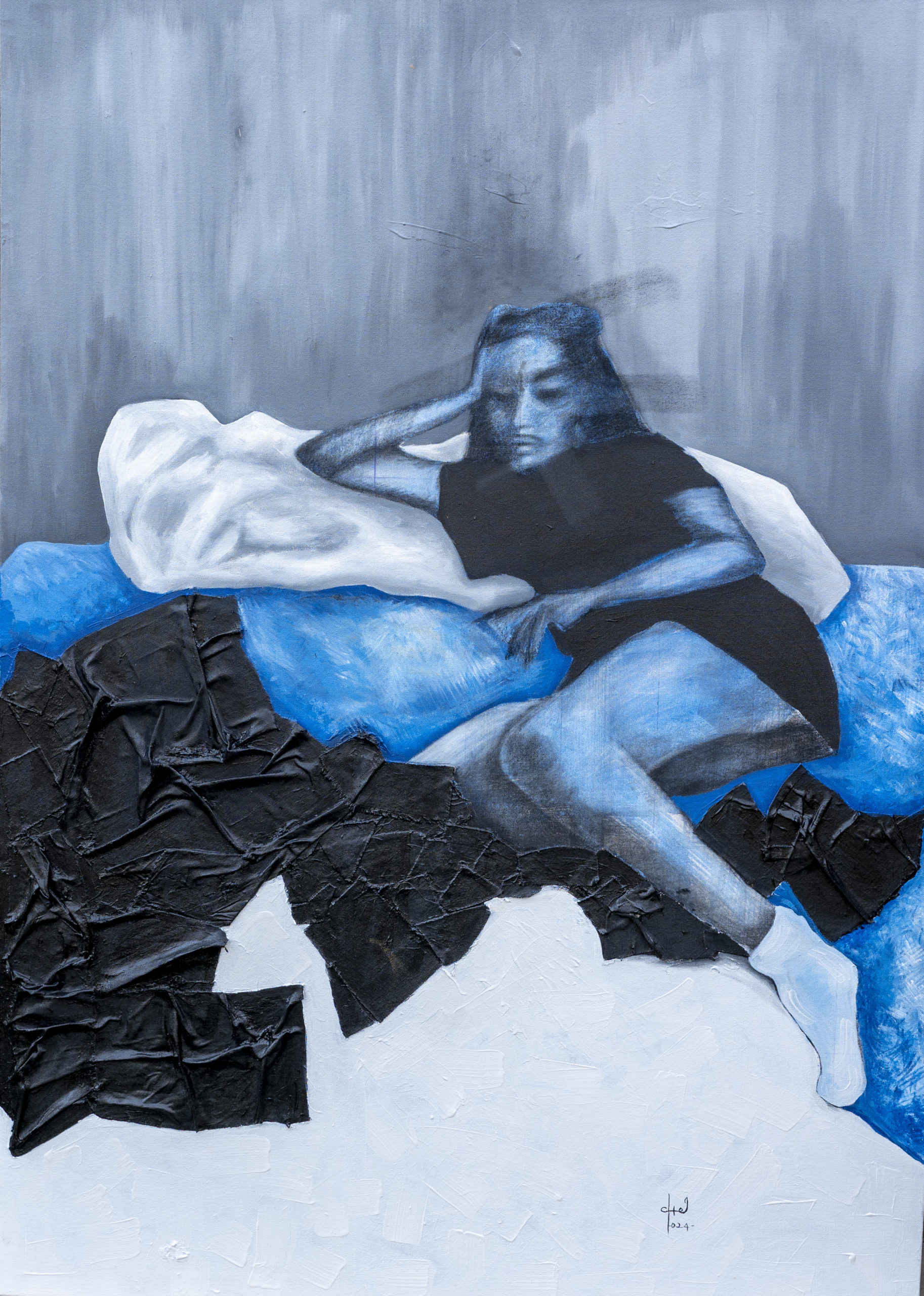
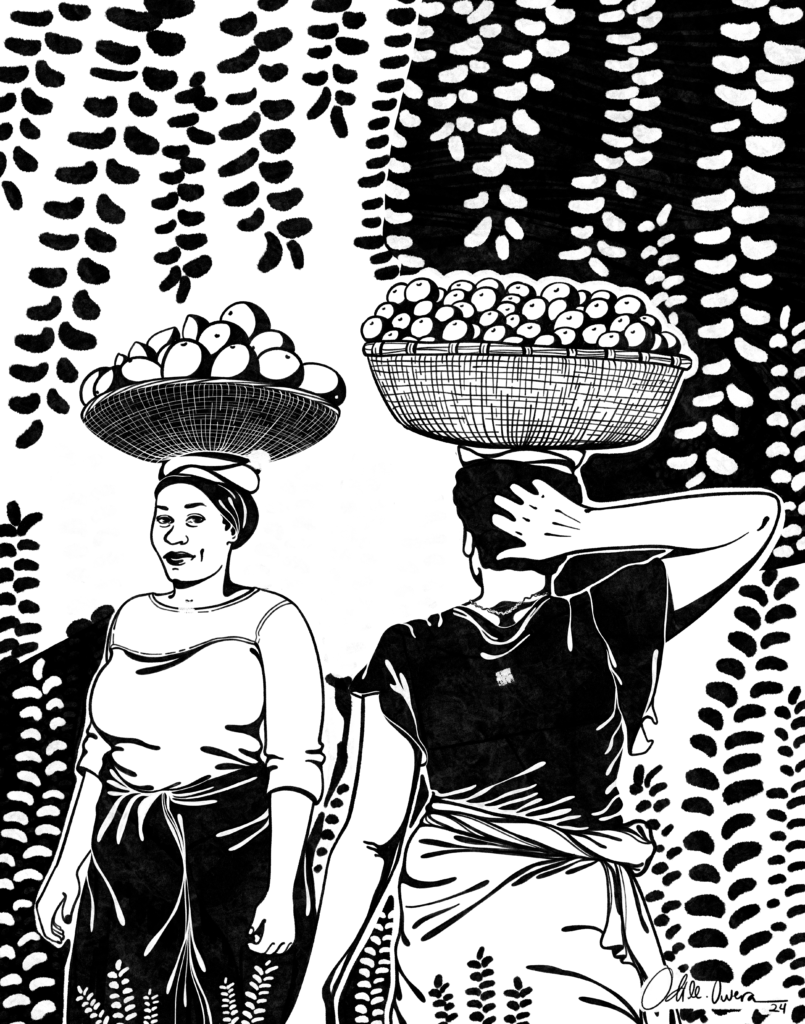
JK: There are many memorable stories from the exhibition. One that stands out is a series by Odile Uwera, ‘Working Women’. Her work highlights traditions that are often quiet and take place in the backyard. These traditions do not claim power upfront but are universal and have held communities together for centuries. This series beautifully illustrates the subtle yet profound impact of women’s contributions to cultural and communal cohesion. The reception to Uwera’s work was a powerful reminder of the importance of making women’s art more visible, as it brings to light the crucial, often unseen roles that women play in our society.
DPK: What questions did you or the artists find yourselves grappling with? If I were participating in this exhibition, I might be preoccupied with questions about how to translate trauma into narrative–how to tell stories about the untellable.
I’d also worry about the tensions between individual and collective memory, particularly within the context of institutionalized commemorations of genocides. What if the official narrative is what I wish to forget, and what the state wants me to forget is what I desperately want to remember? How do we heal and reconcile with a violent past without being overwhelmed by the weight of all the remembrances attached to it? How does the process of unlearning preconceived ideas and historical narratives intersect with the risk of being perceived as engaging in genocide denialism?
JK: In this exhibition, we grappled with numerous profound questions. Telling stories that can be triggering takes courage, and it requires us to be considerate. Everyone’s journey is different, and we all approach life differently despite what we are told.
Translating trauma into a narrative is a delicate process. It involves finding a balance between expressing personal pain and making it accessible to others. The artists had to consider how to convey their experiences without retraumatizing themselves or their audience. Art became a medium through which these difficult stories could be told, offering a way to process and communicate profound emotions and experiences.
In some cases, artists explore how to honor their memories and truths, where each one tells a different story that inspires people on a different level and provides a platform for these personal stories to be heard and validated.
Healing from a violent past involves navigating a complex landscape of memories and emotions. The artists considered how to create art that acknowledges and processes these memories without being consumed by them. Art offers a means to start important conversations and facilitate healing, providing a space to address and work through trauma.
Art can be a powerful tool for healing and initiating important conversations. Artists, as the voice of society, draw inspiration from everything around them. Through this exhibition, we sought to honor diverse experiences and perspectives, fostering a dialogue that acknowledges the complexities of memory, trauma, and healing.
DPK: In more general terms, how have other Rwandan artists approached memories of the genocide?
JK: Rwandan artists have been approaching the subject of the genocide by creating songs for remembrance and reconciliation. In addition to music, photography has played a significant role. For some genocide survivors, photographs are the only way they have come to know their families, and in many cases, these pictures are the only things left to them preserving precious memories and providing a connection to lost loved ones.
Furthermore, various forms of art are being utilized to aid in healing and reconciliation. Theater productions, books, and visual arts have become powerful mediums for expression and healing. Plays and theatrical performances offer a space for storytelling and emotional release, while written works capture personal and collective narratives, ensuring that the history and lessons of the genocide are not forgotten and won’t happen again.
Visual artists are also contributing by creating portraits of survivors which I believe serve as a therapeutic process for both the artists and the subjects. Through these diverse artistic expressions, Rwandan artists are working to heal the nation and ensure that the memories of those lost continue to inspire a commitment to peace and unity.
DPK: What do you hope visitors will take away from Fierce Femmes, especially those that are unfamiliar with Rwandan history and culture?
JK: I hope visitors will take away a profound understanding of what it feels like to be a Rwandan woman 30 years after the genocide against the Tutsi. This exhibition offers a unique opportunity to discover Rwanda of today through the lens of artists who share diverse stories celebrating the contributions of women in shaping modern Rwanda. From agriculture to culture and across all sectors, these stories highlight the resilience, strength, and creativity of Rwandan women.
I believe that visitors will be inspired to learn more about Rwanda and move beyond the historical associations of the genocide. This exhibition aims to show a vibrant and evolving nation, encouraging people to take a step and see for themselves the progress and beauty of Rwanda.
There is a lot to learn, and I hope this exhibition sparks a desire in visitors to explore and understand Rwanda’s rich culture and the pivotal role women have played in its development. Rwandan women have always been involved in the arts, from architecture to the famous imigongo art.
DPK: What advice do you have for other artists and organizations looking to support women’s art?
JK: My advice is to recognize the abundance of talented women artists and make a concerted effort to include them in art projects and initiatives. Provide them with opportunities to showcase their work, and you will see the immense value they bring to the art scene with their diverse voices. Women artists contribute unique perspectives and powerful concepts that can drive significant change and innovation.
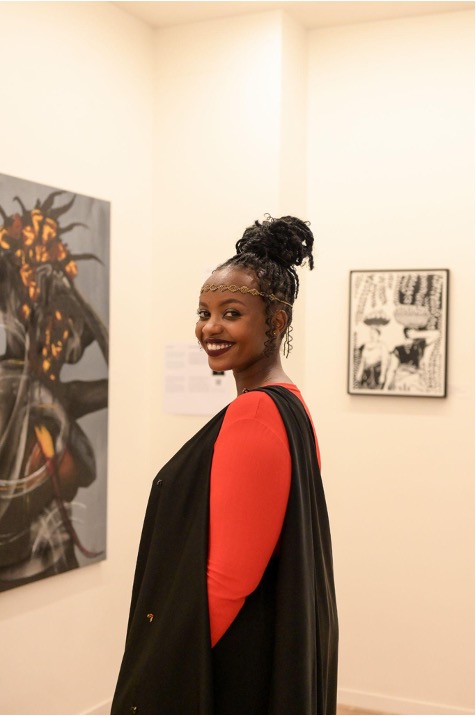
Jemima commenced her artistic endeavors in 2013, initially exploring painting as a medium. Fueled by her passion for advocacy, she immersed herself in creating and learning through art, collaborating with community members of all ages. Over the years, her artistic exploration has delved into diverse topics, including women empowerment, environmental protection, and mental health.
Noticing a glaring lack of visibility for women in visual arts in Rwanda, Jemima became a fervent women’s art advocate, aiming to elevate women’s presence and foster a more inclusive art environment. This commitment led her to establish Impundu Arts Center in 2022, a dedicated platform for women artists to exhibit their work. Her contributions to the arts earned her a 2023 Forbes Women Africa Social Impact Awards nomination.
Jemima’s journey is featured in ‘HER STORY,’ which was published by Kvinna till Kvinna. ‘HER STORY’ highlights the narratives of 32 courageous and visionary women in Rwanda who have been instrumental in women’s rights advocacy.
Fierce Femmes was instigated by Dr Ceri Chillier-Whatley, also the sound curator of “Performing the New Rwanda“, a playlist curated to deepen connections to the artistic narrative of the exhibition.
The initial concept of Fierce Femmes originated in 2016, during Ceri’s PhD research on the Rwandan music industry. The focus was not on the Genocide, but on showcasing contemporary female voices through various artistic mediums, with the goal of providing a platform where talented Rwandan women artists demonstrate Rwanda’s transformation over the past 30 years.
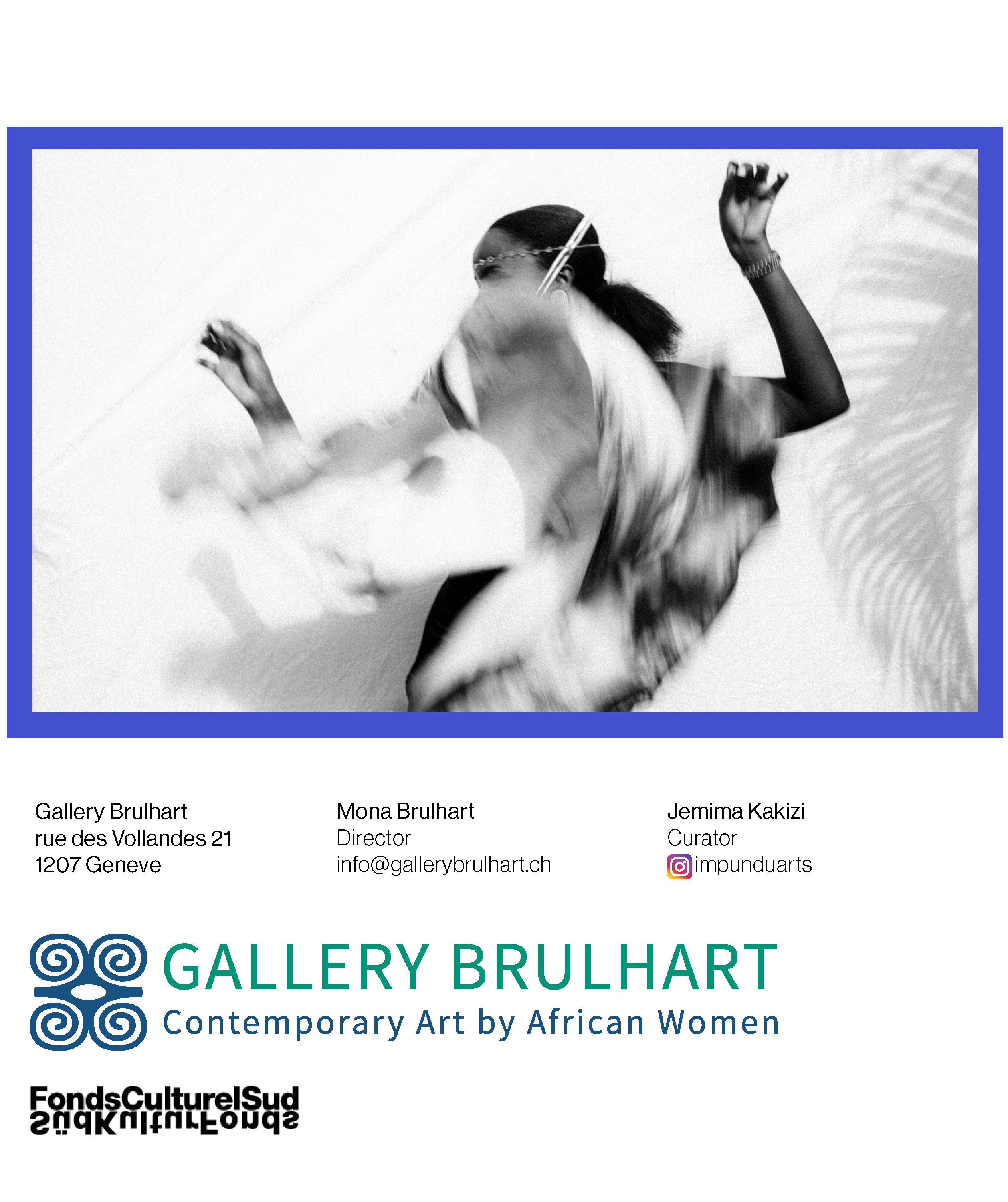
The resulting exhibition, curated by Kakizi Jemima, is running at Gallery Brulhart – a space in Geneva that was founded by Mona Brulhart in 2020, dedicated to the promotion of contemporary art by women of African descent – now until Thursday 4 July.
GALLERY BRULHART
Rue des Vollandes 21 1207 Genève
https://gallerybrulhart.ch/exhibitions/fierce-femmes/
On its closing day, 4 July 2024, the Fierce Femmes exhibition will travel to the World Health Organization (WHO) in Geneva for the celebration of Rwanda Liberation Day (Kwibohora).
Fierce Femmes was funded by Gallery Brulhart, with the support of L’Espace and Fonds Culturel Sud.
Categories: Conversations with - interview, dialogue, Q&A
 Q&A: Words on… Noisy Streetss’ ‘Love in Detty December’ anthology, III
  Words on… Maik Nwosu: A Voice above the fray (Q&A)
  Q&A: Spotlight Interview with Ellah Wakatama, Chair of the Caine Prize for African Writing
  Q&As: Nadia Davids’ ‘Bridling’ – on the Caine Prize Shortlist 2024
  africainwords.com
join the discussion: