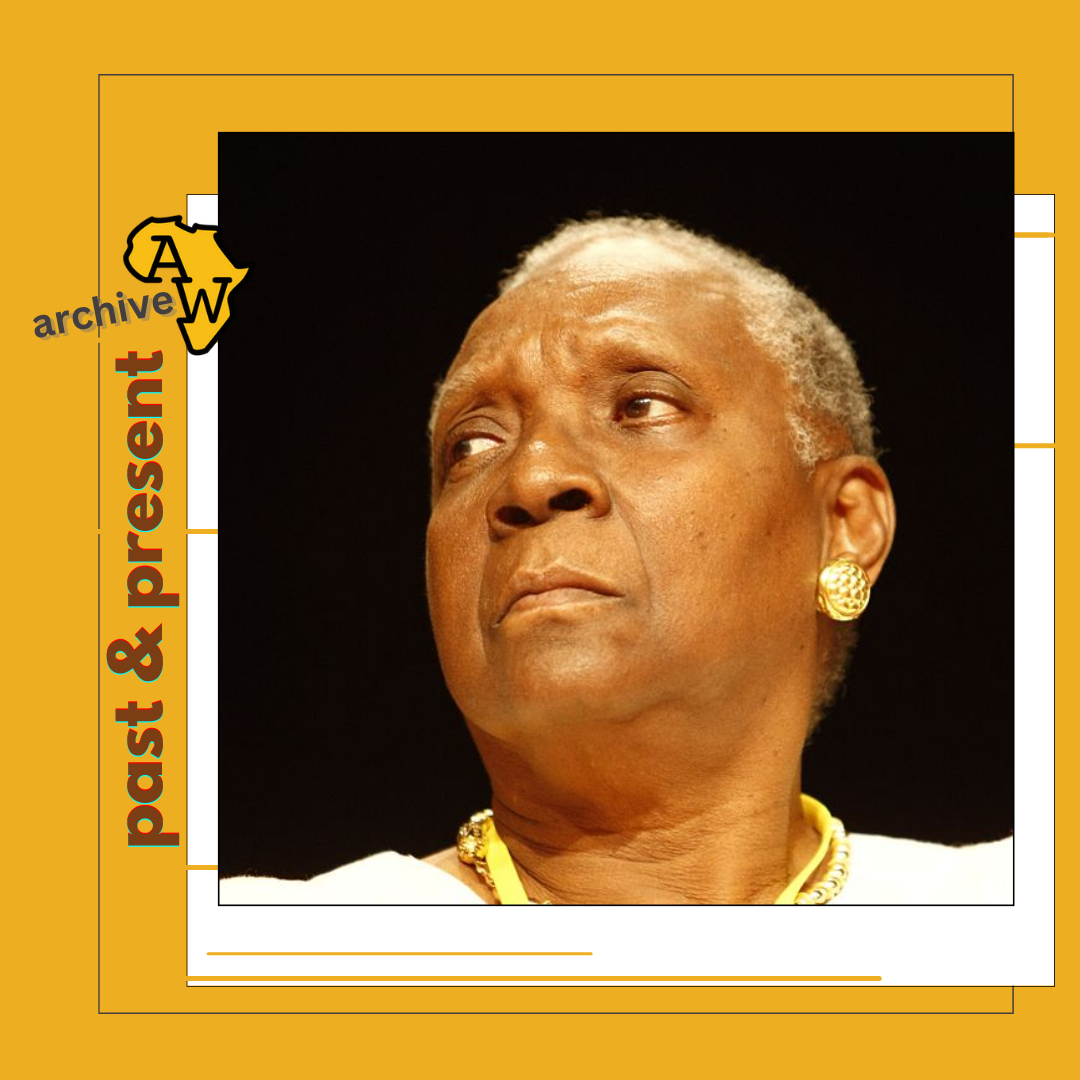
Our #PastAndPresent archive dip today spotlights writer Maryse Condé (11 February 1934 – 2 April 2024), as her work and legacy is threaded through our archive posts.
Two ‘couplets’ of reference emerge, set into conversation with each other as they seam together — directly and less so — around aspects of Condé’s writing; more particularly, we are re-reading them together for the relevance of our archive as they are in the orbit of two of her novels: Ségou: Les Murailles de Terre / Segu: A Novel (1984, literal trans. ‘the Earthen Wall’); and Histoire de la Femme Cannibale / The Story of the Cannibal Woman(2003).
Couplet 1 — Historical fiction: Condé’s precolonial Mali
In couplet 1: two Q&As mention Segu, Condé’s third novel (first published in 1984).
Set in historical Ségou, now part of Mali, from 1797, this intergenerational historical epic tells the story of Mali’s triple and simultaneous colonisations through the experiences of a Bambara family, the Traores.
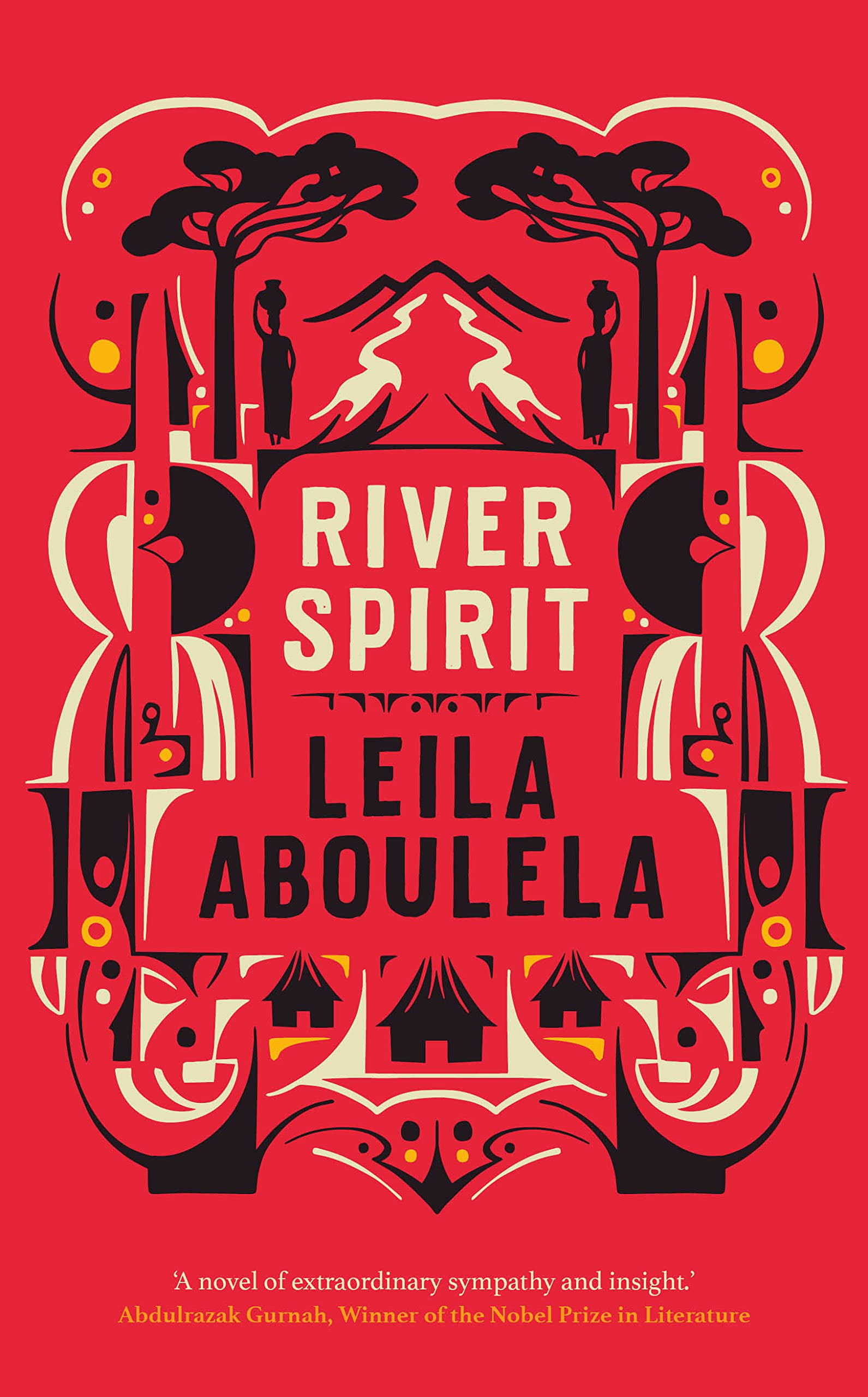
Our Instagram post above, in memoriam for Condé, refers back to a Review Q&A with the writer of River Spirit (Saqi Books), Leila Aboulela.
Part of a longer review post by AiW editor Ellen Addis, Aboulela’s mention of Segu — arguably Condé’s most widely read novel — comes in their discussion of River Spirit and historical fiction, picking up on the review’s clarity in pinpointing the ways that River Spirit “rewrites the footnotes of history”, filling “gaps and omissions through creative imagining” of the historical narrative which takes place in 1880s Sudan. Re-tracking the rise of the Mahdist Revolution in the process, a context the review summarises in brief as follows:
River Spirit traces the rise of the Mahdi from a small following to its spread throughout Sudan – as Aboulela’s narrative has it, “the Mahdi has coalesced the nation’s sense of injustice.” […] The Mahdist War took place between Mahdist Sudanese followers of Ahmad bin Abd Allah and the forces of the Khedivate of Egypt. Joined later by British forces – and expanding in scale to include the Italian Empire, the Congo Free State and the Ethiopian Empire, ranging across Sudan, Ethiopia, Eritrea, and Uganda – the wars resulted in the nominally joint-rule condominium state of Anglo-Egyptian Sudan from 1899-1956, during which Britain had de facto control over the Sudan, a rule that ended with Sudan’s independence.
It is in Ellen’s accompanying Q&A that Aboulela recommends Condé’s Segu as an exemplary model of the genre, expanding the connections between the two books’ expansions on historical experiences of colonisation, and of women writers living across histories and homes — for Aboulela, Sudan and Scotland:
AiW: If you could recommend any historical fiction novel other than your own, what would it be?
Segu by Maryse Condé. This is glorious storytelling with complex characters and unpredictable plots; it sprawls over generations and countries. Set in 18th and 19th century West Africa, the novel details how African traditional life was caught at the crossroads between Islam and Christianity, both bringing inevitable changes. It is one of the best novels I have ever read in my life.
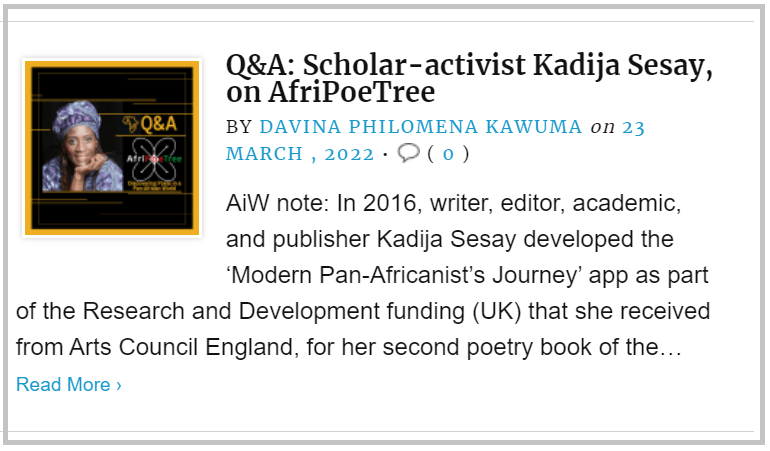
Segu is the novel that is also recommended in the highest terms by Kadija Sesay, in her conversation with AiW Editor Davina Philomena Kawuma in March 2022:
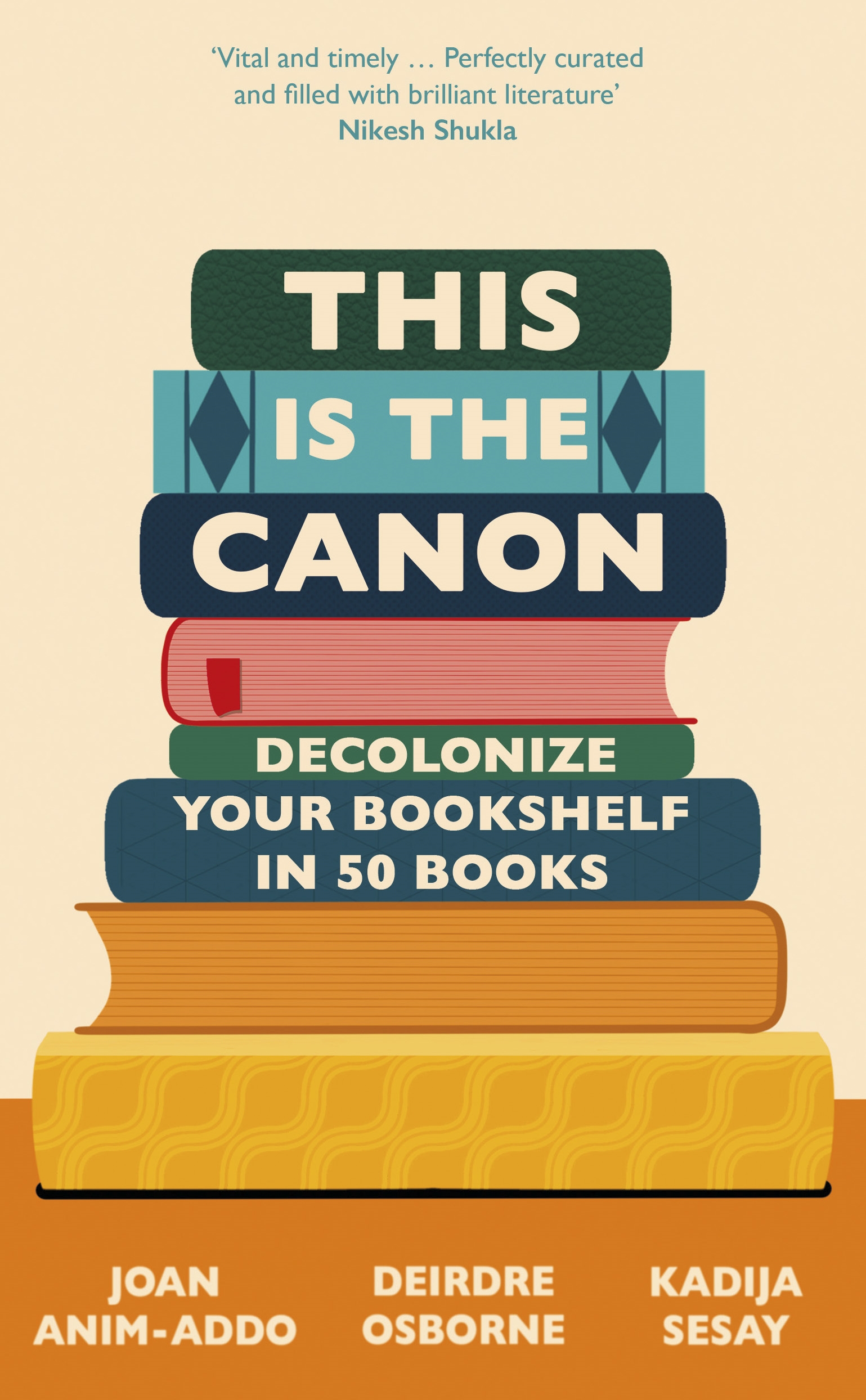
The book is described as “a decolonized reading list that celebrates the wide and diverse experiences of people from around the world, of all backgrounds and all races” – one that “disrupts the all-too-often white-dominated ‘required reading’ collections that have become the accepted norm and highlights powerful voices and cultural perspectives that demand a place on our shelves.”
Is there a novel or two among those 50 that you wish you’d written, and why?
Kadija Sesay: Segu by Maryse Condé. It is a wondrous epic. Although it is set in West Africa, it reflects the richness of our African history per se. I just love it.
Condé was one of the 10 finalists for the 2015 Prize, the last year the Man Booker International existed as an award where the judges considered a writer’s entire body of work on the basis of its “overall contribution to fiction on the world stage” (the Booker Prizes website).
Between 2005 – 2015, the Man Booker International Prize recognised one writer for their achievement in fiction.
Worth £60,000, the prize was awarded every two years to a living author who had published fiction either originally in English or whose work is generally available in translation in the English language.
The winner was chosen solely at the discretion of the judging panel and there were no submissions from publishers.
The Man Booker International Prize was different from the annual Man Booker Prize for Fiction in that it highlighted one writer’s overall contribution to fiction on the world stage. In focusing on overall literary excellence, the judges considered a writer’s body of work rather than a single novel.
Sharing a geographical setting that critically reflects on the Cape Town that each of their AiW pieces are involved with, between them, Charlotte and Sarah’s posts open questions about the spaces of ‘world literature’ being dependent on who is defining the ‘wordliness’ and the ‘literary’, and from where…
Charlotte Hastings’ exploratory ‘Is your reading really ‘useful’? Maryse Condé in Cape Town’, looks closely at the English translation of Condé’s twelfth novel, Histoire de la Femme Cannibale / The Story of the Cannibal Woman (2003), set in Cape Town, in light of developing discourses around ‘world’ and ‘postcolonial’ literary studies:
I’ve recently picked up Tim Parks’ collection of essays Where I’m Reading From: The Changing World of Books (2014). One of the essays in Part 2, ‘The Book In the World’, entitled ‘Writing Adrift in the World’, critiques post-colonial literary studies:
[…]
I’ve been thinking how odd this line of criticism is after reading Maryse Condé’s 12th novel, The Story of the Cannibal Woman, originally published in 2003.
[…]
Condé’s wiki pages mention her autobiographical influences, and her feminist commitments. Like her protagonist, Rosèlie, a painter, Condé has lived and worked in the creative industries in Francophone Africa, after a period of study in France, moving there from Guadaloupe. Here, the character of Rosèlie is used to present us with questions about the complex post-apartheid politics of relationships in South Africa, how couples can have completely different views of their experiences, as well as exploring ideas about home and relocation.
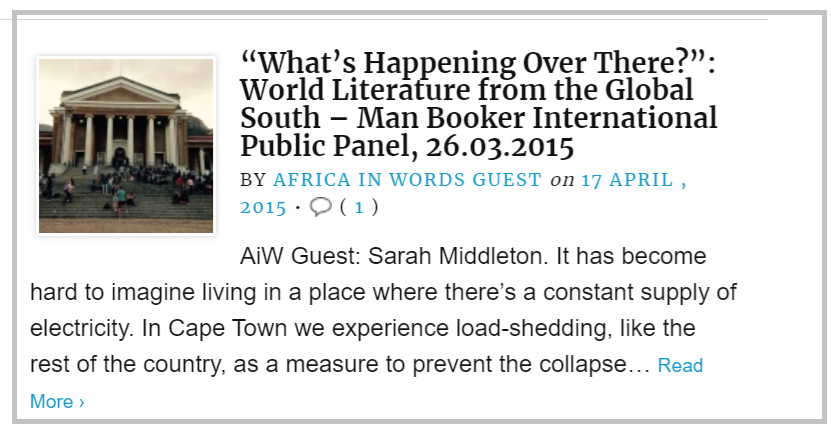
Questions about reading “usefully”, or “responsibly”, that run throughout Charlotte’s exploration from its opening are also brought to the fore in Sarah Middleton’s Guest Post for us, ‘“What’s Happening Over There?”: World Literature from the Global South – Man Booker International Public Panel, 26.03.2015’.
MBI15 Panel: Nadeem Aslam, Wen-chin Ouyang, Marina Warner, Edwin Frank and Elleke Boehmer, at UCT. Photo: Sarah Middleton.
This evocative event coverage post — opening with loadshedding, moving through each of the speakers’ contributions in ways that encapsulate the complex literary debates and riffs of the evening’s setting and theme, World Literature from the Global South — was written on Sarah’s attending the 2015 Man Booker International panel discussion, with judges Marina Warner, Nadeem Aslam, Elleke Boehmer, Edwin Frank and Wen-chin Ouyang.
Jameson Hall, UCT. Photo: Sarah Middleton.
This 2015 panel was held on a site and in a year of closures, perhaps even, in retrospect, foreclosures, and newer, albeit frustrated openings, crossing over into the geographies of valuation that the ‘International Prize’, and its concentration on the University campus, is able to confer.
It is notable that in 2015, the year that Condé was a finalist for the Man Booker International, was its final year as a prize for a single author’s body of work; it was the first and only time in the prize’s history, that it was announced on the African continent; the thematically titled prize event was held in the “fern-filled” grandeur of Jameson Hall, as Sarah puts it, at the University of Cape Town; also the year (and the month) of the RhodesMustFall protest movement, directed at the statue at UCT earlier in March, a campaign that directly intervenes in the literary intellectual debate of the panel:
Question time began, with UCT’s Meg Samuelson opening the floor. One of the first questions was regarding postcolonial theory and the ethics of “imagining the forbidden other”. [Elleke] Boehmer offered the view that literature and the arts “are unique” in that they are sympathetic and do not attempt to appropriate or possess. Nadeem Aslam was responding to this same question when about 25 students trooped silently into the hall and stood before the stage with a banner proclaiming “Rhodes Must Fall”. This, for those of you who live “over there”, is the vibrant and ongoing protest over the statue of Cecil John Rhodes that has occupied pride of place on UCT campus. The story made news headlines when on 9th March, in a protest against institutional racism at the University, a student named Chumani Maxwele threw human excrement at it (notably the contents of a portaloo container in reference to inadequate service delivery).
Although Sarah’s post doesn’t discuss Condé’s work directly, there are overlaps in the questions that Charlotte’s piece raises — itself less of a traditional review and more of an exploration of the novel’s situation in an emergent value discourse about ‘world literature’ in creative writing and literary studies — questions that go beyond Cape Town as the setting for L’Histoire de la Femme Cannibale / The Story of the Cannibal Woman.
Sarah’s experience, at a raw face of literary positioning in terms of the Man Booker International and being, as she puts it in her title, “over there”, extends the discussion of literary criticism, of the “world” or “postcolonial” literary studies Charlotte begins with, to what could constitute the conglomerate of “the global South”, concentrated by the openings of the incendiary political moment at UCT in 2015:
It felt unreal, and somewhat embarrassing to be sitting in a fern-filled hall listening politely to intellectuals, when outside there was a storm of real-life issues, and students were (and still are) feeling hurt, and angry because of the slow pace of transformation at the University. Which is not to say that their voices were ignored, as the panel engaged conceptually with the protest throughout the proceedings. On the contrary, it even seemed as if the subject of literature from the global South was subsumed beneath the events that were happening on campus, catalyzed by the Rhodes Must Fall campaign.
Perhaps most prominently, there are those questions that are persistent in Condé’s work and present in the Cape Town of The Story of the Cannibal Woman, that are brought into new lights between Charlotte’s exploration and Sarah’s coverage.
In a spotlight refocused by the “ways of reading”, the ways one should or might read the “worldly” Condé — a Francophone black woman writer born in Guadeloupe, and, with The Story of the Cannibal Woman‘s setting, about Cape Town, South Africa, from the perspective of an immigrant — are the narratives that are created around and through the formal study of the writing of fiction, narratives that trail their history of telling and silencing behind them, and that also crack open the possibilities of re-thinking and sharing to forge through ways one should or might make change happen on the ground.
In The Story of the Cannibal Woman, the protagonist’s partner, Stephen, is a white man, an Irish literature professor; the protagonist, a black Guadeloupian woman who, like Condé herself, has traveled via her studies in Paris, living and working across a number of African countries, is a painter and a self-styled mystic. As Charlotte also makes clear, the novel also animates of questions of race, gender, and intimate relationships in a socio-economically disparate post-apartheid South Africa.
Together, the pieces in our archive couplet 2 offer in to the mix the formality and valuing, canonising spaces of the University and the Prize, opening a range of avenues for wider thinking on it: how positionality, histories, and geographies of literary recognition and access feed into the appropriateness of the setting of literary syllabi and how this, as well as other different sorts of canonising activities, play across those concerns of power and definition, and who holds the power to catalyse transformation; of how dated or current and essential debating the canon might be to us now, and what a ‘national literary tradition’ might even be, or what this might contribute to the development of craft in new writing…
Reading this across our archives in light of Segu, too, the example central to the AiW archive couplet 1, raised as a fictional text bringing a series of crossroads for historical Mali onto its pages, being picked up by the writers in the two Q&As as: a) the epic they would have wanted to write; and b) being among the best novel they had ever read… Literature and its possibilities for alternative — for the record and as a document of alternative histories, and the capacity for imaginings otherwise, simultaneously, comes to the fore.
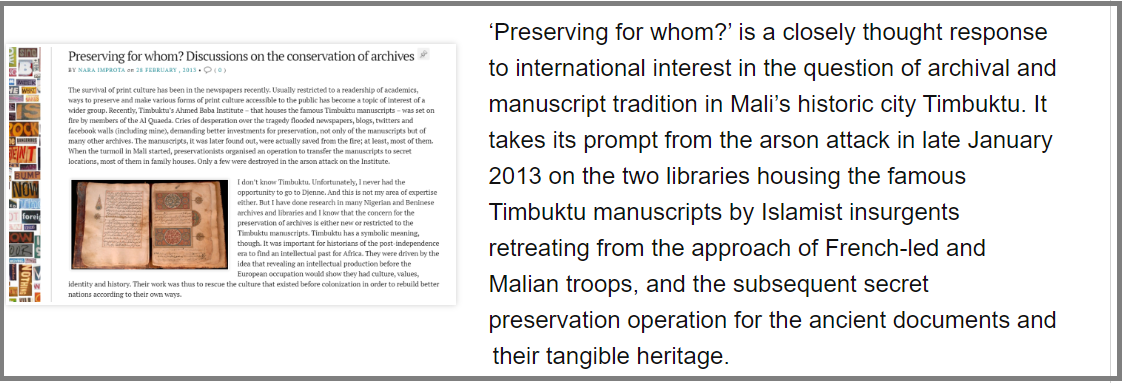
Thinking of histories, with the geographies of institutional recognition and transformation, and how creative and cultural objects become implicated, directly and less so, in accelerated moments of social change, this also brings to mind another of our #PastAndPresents from February 2020. This archive dip sets a post written by historian and co-founder of AiW, Nara Improta, ‘Preserving for whom?: Discussions on the conservations of archives’, in 2013, into connection with other AiW posts in other Februarys (the month of Condé’s passing in 2024):
The post closes thinking about issues related to preservation as it can be framed as a promise to the future. Taking its cue from Improta, it suggests we must go “beyond the question of how and where…
– before ‘who decides?’ and ‘what are the criteria?’, the important question must be ‘for whom’.”
These, and all the questions that come up in these readings, are set into a lively conversation between the posts (do two couplets make a quatrain? Is what we have here, with the late addition of a previous P&P, pentametric? Literature and poetry geeks: rejoice!). And all positioned in the dynamics of legitimacy of the ‘worldly’ status of African authors conferred from over where?…
In broader thinking about Condé as a Francophone, or French and/or Caribbean writer, she is memorably quoted as saying, “I like to say that I write in Maryse Condé” (in, ‘For a writer there is no mother tongue: he forges his own language according to his or her needs’: A Q&A with Maryse Condé, London Review Bookshop, 25 August, 2020).
Wherever we are now in light of these debates and possibilities of change, all serve to highlight the ongoing resonance of writing in Maryse Condé in the multiple spaces of joining and disjuncture present when we ‘read’ her, writing Africa, in the ‘worldly’ and ‘international’.
Condé died in Apt, Vaucluse, southeastern France, on 2 April 2024, at the age of 90.
With thanks to Archive Africa’s instagram post below, for sharing this incredible image of Condé reading Segou (by Philippe Giraud), with words by Amita Sethi.
“On December 9, 2018, I received the New Academy Prize for literature in Stockholm, Sweden, the award set up last year to replace the Nobel Prize, which was canceled after a scandal and dispute at the Swedish Academy. It was the second time a writer from Guadeloupe had been awarded a prize of such importance. In 1960, the poet Alexis Léger, known as Saint-John Perse, was awarded the Nobel. You could not imagine a more perfect contrast: he the descendant of the proud caste of békés, white Creoles, settled on the island since the eighteenth century; myself the descendant of African slaves who crossed the Atlantic loaded like animals in the belly of the slave ships… Read More> from Condé in the New York Review of Books (2019)




 Spotlight on… Editing Anthologies: Doorways, Communities, and Reference Texts
  Words on…Past & Present: The International Black Speculative Writing Festival (London & Remote)
  AiW long read: Caine 2021 – A prize coming of age
  Celebrating World Poetry Day with readings from Wreaths for A Wayfarer
  africainwords.com
join the discussion: