AiW Guests
Interviewers: Farida Elshafei, Ilana Graham, Lauryn Jenkins, Noha Choudhry.
Interviewee: Serawit Bekele Debele.
Interview Date: 14th December 2021
AiW note: This is one in a series of interviews carried out by undergraduate students as part of the module “Ethiopian, Eritrean and Somali literatures in global intellectual history,” taught by Dr Sara Marzagora in the Department of Languages, Literatures and Cultures of King’s College London in the 2021-2022 academic year. The interview scripts have been first edited by Nadira Ibrahim, who holds a first-class English degree from King’s College London and is proud to have contributed to the wider scholarly discussion surrounding these important literatures.

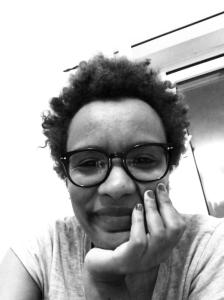 Serawit Bekele Debele is a Junior Research Group Leader at the Africa-Multiple Cluster of Excellence at the University of Bayreuth in Germany. Her work focuses on moments of socio-political change in Africa asking what possibilities these moments might afford non-normative sexualities and genders. Her ongoing project focuses on Ethiopia, Tunisia and Sudan. She is the author of the book Locating Politics in Ethiopia’s Irreecha Ritual (Brill, 2019). Her articles have appeared in journals such as History of the Present, The Journal of African History, and African Studies. Together with Stephanie Lämmert and Yusuf Serunkuma, she is working on the Volkswagen funded project that examines German African Studies through the lens of critical race theory.

The students read Afewerk Gabre Yesus’s pamphlet-novel Tobbya as part of their final year module at King’s College London with Dr Marzagora.
Lebb Wälläd Tarik, literally translated as “a story born out of the heart”, later retitled as Tobbya, was written as an Amharic language study for his students when Afewerk was exiled in Italy. It was published in 1908, a period of transformation for Ethiopia, following the territorial expansion of the Oromo lands, the revival of the Red Sea trade routes, and the ensuing religious tensions between Christian and Islamic regions.
The book displays female agency in war-torn Ethiopia, where battles between the so-identified Christian and incoming Pagan invaders disrupt the lives of the close Christian family unit – twins Tobbya and Wahid, and their parents – who are at the heart of the narrative.
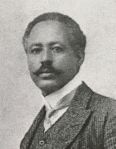
Afäwarq in 1900
(With potential spoilers here, but only relating to those points significant for the interview’s explorations – if you don’t want to see these now, you can skip down to the next paragraph…) Tobbya and Wahid’s father, a high ranking Christian general, or Dejazmuch, escapes the fate of death in battle, only to be sold into slavery, where his master learns of his nobility and offers his freedom for ransom. Wahid journeys to find the merchant who offered the ransom to thank him, but is then enslaved himself. On learning of this, Tobbya dresses as a boy to accompany her father to find and free Wahid. When the pair are caught up in another Pagan invasion, the strength of Tobbya’s faith keeps them hopeful, rendering what has happened to the family through the story as God’s will, and their relative safety a result of divine intervention. Although later captured by his pillaging army, the Pagan king declares they should not be harmed, eventually declaring his love for Tobbya, while his cousin, who had fallen for Tobbya when disguised as a boy, then falls in love with Tobbya’s twin, Wahid, who the king has saved from slavery. After Tobbya’s refusal of the hand of the Pagan king, he and his followers convert to Christianity and the novel ends with the celebrations of a double marriage and a nation united. (With thanks to, and for more on Tobbya, please see KCL’s series of excellent blog posts on the novel from the winners of the Department of Comparative Literatures’s 2020-2021 Blog Award for the module 6ABA0013 ‘Ethiopia and the Horn of Africa in Global Cultural Studies’. )
Following this young woman, Tobbya, who plays with cross-dressing, concealing her gender, and who intervenes in the fate of the kingdom, Tobbya’s themes of female subjectivity, empire, and religion, as well as its historical significance for Amharic-language literatures, have made it the topic of much academic interest. This includes work by Dr Debele, whose focus on the politics of non-normativity and the possibilities of queer readings made available by the text are opened up by the students in their interview below.
In December 2021, Dr Debele talked with the students about their thoughts and readings of Tobbya, as well as their responses to her work. Three papers, in particular, stand out from the interview transcript: Dr Debele’s response to Tobbya at the 2020 online conference Ethiopia: Modern Nation — Ancient Roots (The Africa Institute), titled “Reading Afewerk’s Tobbya, Troubling the Ethiopian (Imagi)nation” fascinated the students; they also discuss “The Politics of ‘Queer Reading’ an Ethiopian Saint and Discovering Precolonial Queer Africans” (JACS, October 2021), Debele’s close reading of the scholar Wendy Belcher’s interpretations of the sexual life of Gädlä Wälättä Petros, a seventeenth-century Ethiopian female saint. In their conversation at this point, the students pick up on the article’s investigation of the “calling out” or “calling in” when taking interpretive positions on this seventeenth-century hagiography, as well as Debele’s focus on the relationship at the heart of Belcher’s interpretation; the other article in focus, “Marriage and Empire: Consolidation in Post-Liberation Ethiopia (1941-1974)” (JAH, August 2020), inspired the students to talk more about how literature makes the queer body and queer identity legible, in and for Tobbya and Dr Debele’s work.


Their discussion, then, opened out onto a particular strand of the module’s ongoing conversations, thinking together through gender history and queer theory in the context of the literatures of the Horn of Africa…
NB: one of the student interviewers in the group has chosen to remain unnamed throughout and is here under the moniker Interviewer 1
.
Interviewer 1 (to Serawit Bekele Debele, for KCL): Hi Dr. Serawit!
Serawit Bekele Debele: Hello. It’s good to see you.
Interviewer 1: We are all excited to be able to see you face to face. Thank you so much for agreeing to be part of the interview project. I think I can say very comfortably on behalf of everyone that we have really enjoyed researching your work and to get the opportunity to ask you some questions. Could we start by asking you to please introduce yourself?
Serawit: Hi, my name is Serawit and I am from Ethiopia. I did my PhD here in Germany where I am currently based. My PhD is in Religious Studies and in it I have tried to look at political subjectivities in huge religious gatherings to understand how political processes take shape in religious spaces. In 2017, I moved on to my current project, which is focused on non-normative genders and sexualities and how political and historical processes can help us understand the struggles against marginalisations. For this project, I have been focusing on Ethiopia for the last ten or so years but now I am also looking at Sudan and Tunisia.
I have a small research team. I work with two doctoral researchers. What we do is try to understand how political transformations afford possibilities for imagining an otherwise form of existence for marginalised or minoritised groups. We ask questions like, “what do these transformative movements allow in terms of other ways of thinking of a different world that is non-heteronormative?”
Interviewer 1: Thank you – that leads quite nicely into some of the questions that we have lined up. What is the significance of terms such as “calling out” and “calling in” and how does it shape the way in which you think scholars should collaborate when analysing texts from Ethiopia? [In the article, “The Politics of ‘Queer Reading’ an Ethiopian Saint and Discovering Precolonial Queer Africans,” Dr Debele asks “what it means to discover Africans through our sexual desires” and discusses interpretive positions on a seventeenth-century hagiography, taking a cue from the Oromo feminist scholar Martha Kuwe Kumsa (2020). To “call out” is to “point out the epistemic violence committed” by the Western scholar’s self-acclaimed innocence and masquerade as a mouthpiece for “the Other.” Conversely, to “call in” is “to recognise the issue as part of the broader historic and structural problems with knowledge production,” while also inviting others to study and think together, to engage in, at times, uncomfortable conversations, approaching all points of views with respect and seriousness, holding all equally accountable.]
Serawit: This idea of “calling out” and “calling in” was not my idea originally, a colleague, Martha Kuwe Kumsa, introduced it to me. While I believe there are many problems in the relationship between research and researchers in the Global North and the Global South, I also do not necessarily believe in gatekeeping in a sense. For me, “calling out” is problematising the idea that the Global North must know women from the Global South in a way that is attuned to “their” imported theories and methods. We need to be aware of what it is that we are doing to the subject, to the archive, to the researcher with whom we are working with, and to our interlocutors. My idea in “calling in” was to ask: how can we do responsible research, responsible to both the subject matter and responsible to the people we are interacting with? I was thinking about all these intricacies of my own positionality and of the positionality of a white female researcher who, for example in “The Politics of ‘Queer Reading’,” is trying to understand or read a text on a hagiography that was produced in the 17th century. I know some colleagues might disagree with this idea of “calling out” and “calling in” because it is not always generative. But it also depends on how we qualify, or what we call “calling out” and “calling in” at a certain point in time.
Interviewer 1: Something that we have been looking at in the module “Ethiopian, Eritrean, and Somali Literatures in Global Intellectual History” is the figure of the scholar in Ethiopian history, as well as in Ethiopian literature. We have also been looking at competing readings of 1960s Ethiopia – either as a “golden age” or as a time of “intellectual crisis.” We wanted to ask if you view the position of the intellectual in 1960s Ethiopia as one in “crisis” and what thoughts you have surrounding the role of the intellectual in Ethiopian society today?
Serawit: I do not know whose assessment it is that in the 1960s, Ethiopian intellectual life is characterised by crisis in the main. However, I think if any time can be characterised as such, it would be the time in which we are living now – and this view is shaped by conversations I have had with my Ethiopian contemporaries. The 1960s and early 1970s are times we remember but have not experienced; we can only access these periods through readings, literary productions, music, poems, and what was written as academic pieces from and about the time period. In relation to that, I would say that we are quite impoverished now; that would be my assessment. The crisis the Ethiopian intellectual currently faces is that we are co-opted by political processes, and we are a part of this petty bourgeois class benefitting from injustices. I think we have been trapped by capitalist systems that make us look for what is profitable even in our scholarship. That is how I see it.
Interviewer 1: I would like to stay with a focus on “The Politics of ‘Queer Reading’” and bring in another paper of yours that we all took a great amount of interest in: “Marriage and Empire: Consolidation in Post-Liberation Ethiopia (1941-1974).” In both articles you are discussing the queer body and how the queer body and queer identity are made legible in literature.
In “Marriage and Empire,” when you discuss how the queer body is made deviant both in literature and society, you cite Seife M. Yeteshawork’s Sét nat wayes wänd — the quote in relation to this states that it is “a text that condemns the failed nuclear family for seemingly producing queer children.” I wanted to ask, in texts, like that of Yeteshawork’s, where the author is explicitly against non-normative gender and sexual identities, are the texts still helpful in allowing us to understand what Ethiopia’s queer culture looked like? Or is it better to look at texts that embrace these identities?
Serawit: I think we have difficulty finding texts that at least explicitly embrace these identities. For example, Yeteshawork has written this creative writing piece but has also included a small preface to this novella, where he says something along the lines of, “I am writing this as a creative writing piece, but I know it is based on my observations. This is something that has become characteristic of our times and needs to be critiqued.”
Yetashework is taking a critical lens but what he is making available to us at the same time is a story of non-normative desire, gender, sexual identity, and experience. For me, the text becomes interesting because it legitimises queer existence even when it views it as a social problem. One of the arguments that is raised nowadays is that these identities are an importation from the West and such. This becomes a text that challenges that argument.
There are also some beautiful scenes that Yetashework describes – he does not say these are beautiful scenes, that is my reading. But scenes of the dancefloor, for example, the dynamics that go on, the use of makeup. There are some fascinating details of the child’s experience, as well as his upbringing. I shared the text with my queer friends, both in Addis Ababa and in the diaspora and I know my friends find a lot of validation and resonance in reading it, irrespective of judgmental undertones that run throughout the book.
So, how do we read these texts? I think that is an essential question, as it is for Tobbya. We can look at Tobbya as a cross-dressing person but nobody really talks about the gender non-binary and the non-normative presence that she represents in the text. A different kind of (re)reading brings out strongly the non-normative and non-binary subjects that are hidden in conventional interpretations of the novel. Those are so obvious in the text but are also hidden because of the way in which scholarship deals with archives like this. So the question really is, how do we read these archives?
Interviewer 1: This is something that you also propose in “The Politics of Queer Reading,” a broadening out of what it means to perform a queer reading. To quote from your paper: “What if we take queer reading as a political act of appropriating normative texts and infusing them with new meanings that unsettle the taken-for-granted-ness of heteronormativity?” But, is this not a form of queer reading that is tied to presentist concerns of our current socio-political contexts? And can this method of reading exist alongside other forms of queer readings?
Serawit: In terms of disturbing the taken-for-granted-ness of heteronormativity that animates the texts at hand, a queer reading of a text is a political act. For example, as we see in Tobbya, scholars have always had a particular angle of reading the text in relation to the consolidation of empire via a heteronormative angle, and never in relation to the person and her ambivalent gender identity that is central to that empire consolidation.
One of the things we can do in the queer reading is disturb the idea that this is a normative text, endorsed by the literary tradition in Ethiopia. The reading that Tobbya is a beautiful young woman who is there to be given away to a husband, for instance, conceals a lot that needs to be unpacked. Our reading has to then be disturbing that by unpacking what is hidden. For example, we read to foreground Tobbya’s shifting gender identity and the king’s consistent obsession with her beauty even when she was presenting as male.
Do we have to tie it to presentist concerns? Yes and no, but I do think that is where we have to be careful. Such a question is also tied to another: why do we want a queer reading? Apart from our intellectual curiosity and apart from fighting for the cause of LGBTQI+ people in Africa (as I point out when I question Belcher’s intention), what is it exactly that informs our preoccupation when we read texts such as Tobbya? That’s where I take issue.
A certain presentist preoccupation I feel sometimes comes from not caring about the historical context. We are not “respecting,” if I may use that word, the context that produces such texts. That’s when a presentist preoccupation becomes problematic.
Interviewer 1: As you had mentioned, there is very little critical work around Tobbya, considering it is such a canonical text. In the existing scholarship, there is a lot of criticism of the text’s author, Afewerk, as he appears to omit any consideration of Wahid, Tobbya’s brother, and, even more significantly perhaps, of Tobbya’s mother at the end; there is nothing explicitly written about the mother. I was curious to know if you had any thoughts around the role of the mother?
Serawit: It is true. I find it curious that we are not told much about what happens after the wedding. That decision by the author is interesting because it leaves room to imagine what might have unfolded. We can imagine Tobbya taking on the role of the “proper woman” who gives the king children, or a more proactive role, such as that she takes throughout, at least since the time she left home with her father. In terms of Tobbya’s mother and her role, I believe there is no meaningful way in which mothers are regarded in these texts and this may be a general commentary on the ambiguity of motherhood in Africa.
Interviewer 1: Thank you. It’s also interesting to think about how Tobbya and the role of the mother interacts with the rest of the continent. I’ll pass over to Ilana now.
Ilana Graham: Thanks. For my first question, I wanted to expand further on Tobbya, and the approach to it from a Western lens: what would you say are the risks associated with this lens? Thinking about what you wrote in the “Politics of ‘Queer Reading’,” where you discuss the problem of the production of a “transhistorical woman,” whereby the African woman can be recognised only by assimilating her into Western methodological and theoretical registers (p.7), what are some ways we can avoid doing that, specifically regarding Tobbya as a character?
Serawit: I think it’s easy to criticise what other people have done, and I think that is why it was easy for me to reach for Wendy Belcher’s reading of the hagiography, which is translated as “The Life and Struggles of our Mother Walatta Petros” in her paper, “Same-Sex Intimacies in the Early African Text Gädlä Wälättä P̣eṭros (1672): Queer Reading an Ethiopian Woman Saint.”
My misgiving with Belcher’s reading of the central relationships in Gädlä Wälättä P̣eṭros, for example, is that she has not paid attention whatsoever to the context of what was going on at the time. What did gender relations look like then? If we are looking at a hagiography that has been written in the 17th century, there is a lot more material about that period that we can now consult. We can ask what gender relations and relationships between people looked like; what does the Ethiopian marriage act look like and what did it look like back then? If we are talking about a certain priest matchmaking between these two women in the hagiography and make an abstraction from that to say “Oh, they lived like a married couple, and they were brought together by a priest,” do we leave it at that? Or do we ask a few more questions to understand the complexities of this? Whose way of looking at the world does “matchmaking priest” privilege?
If you look at the history, you can see that the woman, Wälättä P̣eṭros in the referenced hagiography, never really liked to be alone; she always had someone accompanying her. This accompanying someone was not always a servant or a house cleaner, or a wife or a partner, but there were always people around her, so it is not just Ehətä Krəstos or any one other person in a particular role with a romantic relationship at the heart. But if we want to do a queer reading of the text, of course, we get rid of that knowledge despite it being crucial. We just dismiss it because it does not serve this particular theoretical and mythological outlook we want to impose.
If we are interested in the Western audience and not understanding this complex historical character, then we try to do what makes sense to the audience, and not do justice to the woman’s life. I think that’s the process by which scholars end up constructing a transhistorical subject to which we are all expected to relate to across time and space.
Ilana Graham: Thank you for that insight. We have had the opportunity to look at your forthcoming paper, “Reading Afewerk’s Tobbya, Troubling the Ethiopian (Imagi)nation,” where you discuss Tobbya’s gender identity and the kind of non-normative identity she puts forward. You mention that she exists in “the space of in-between” and she has “ambivalent gender identity.” Could you explain what you mean?
Serawit: I couldn’t do as much as I wanted to do with either Tobbya or the king in terms of sexual and gender positionalities because of the context in which I presented the draft [at the conference Ethiopia: Modern Nation — Ancient Roots] so there’s a lot still to be desired in the paper. But the “in-between” refers to how Tobbya plays a lot with her gender identity. The king puts her somewhere and then his cousin puts her somewhere else, and then there is a way in which she positions herself – you cannot put her in one place in terms of the gender binary. That’s why I call it “in-between” and “ambivalent;” that ambivalence becomes extremely generative for Tobbya because it enables what she and her father set out to achieve. It’s significant in that it allows her to follow her father. If she did not mention the idea of “concealing” herself, that journey simply would not have happened.
Tobbya plays with cross-dressing and concealing her gender, and she doesn’t disclose her identity even in the moment of being accused of trying to rape the king’s female cousin. The king finds her extremely striking and attractive, and you think “but he is the King, he’s supposed to be highly normative?,” but he doesn’t even tell himself off; he doesn’t try to stop himself. He indulges in that feeling of wanting to be close to her and he is always fascinated by her. The king is also very attentive to how she feels, he reads her face and then decides on actions based on how he thinks she feels in the moment. So, when I refer to “ambivalence,” I am talking about this playfulness when Tobbya and her father are under the protection of the king, this lack of rigidity that we might expect.
There’s a lot of interesting happenings in the text that make us think beyond the ideas that already exist around Tobbya. Yet, I should note that there are only, I believe, two or three really close readings of the novel, Yonas Admasu’s being the main one [Admasu’s essay, “The First-born of amharic Fiction,” is found in Silence Is Not Golden: A Critical Anthology of Ethiopian Literature, edited by Taddesse Adera & Ali Jimale Ahmed (Lawrenceville: Red Sea Press, 1995)]. For such a fascinating text, people paid little attention to it, and the little work around it that is available always goes for the very specific idea of how the empire was consolidated.
Ilana Graham: Do you think it’s possible to look at Tobbya as a feminist text?
Serawit: This question reminds me of a conversation I had not so long ago about Friedrich Engels being a feminist. The person I was having the conversation with had the view that Engels was a feminist because of his text The Origin of the Family: Private Property and the State. I think, however, that there’s a difference between saying Engels has inspired a whole lot of feminist work later on and saying Engels was a feminist.
In relation to your question, I would say we can do a feminist reading of Tobbya without perhaps calling it that, so as not to insinuate some feminist sensibility about the author which he might not call himself. To say it’s a feminist text would be to attribute some kind of feminist realisation onto the author, which I don’t think is the case. Nonetheless, Tobbya does inspire a lot of feminist exercise and reading.
Ilana Graham: Do you ever experience any resistance to the type of reading that you do on certain texts, or in your work in general?
Serawit: Yes, I do get some pushback sometimes. I think in response to this pushback, I choose which spaces to engage with. I wouldn’t make presentations in Ethiopia most times regarding topics that really matter to me. I read the contemporary situation in Ethiopia and ethnic federalism through the lens of queer people and that is not always welcome.
Ilana Graham: Lastly, what are your research plans for the future?
Serawit: I am focusing on two main research agendas at the moment. One is my book project trying to think about pleasure and freedom in the context of post-cold war Ethiopia. The second is the work I am doing with two of my colleagues which is concerned with African Studies in Germany and its historical trajectories.
Ilana Graham: We all wish you the best of luck!
On that note about intending to draw from literary sources in this project, we wanted to hear your thoughts on the role of literature and fiction as a reflection of the context of a nation. How important do you think it is to look at the case study or angle of sorts, to look into the context of the time?
Serawit: Literature is not my field; I am a student of Religious Studies, but I greatly enjoy looking at where literature intersects with history more broadly but also with current moments and the future. There is one thing that I learned when reading C.L.R James — how fiction is not only a reflection of its time but also what is to come. I tried to think about Tobbya in relation to what it could tell us about contemporary Ethiopia, its consideration of relations between different religious groups in the country now, in terms of the state and the way it regards different religious groups, for example. I am also thinking about what might inform the imagination of the author when he brought two major religious groups in the country, I mean Islam and Orthodox Christianity, to the novel, but he decided to make one triumphant and another one docile. This means that literary productions will continue to make a significant part of the material I am working with.
Interviewer 1: Thank you for all your fantastic work, I wish you all the best with your future research also.
Serawit: Thank you very much.
All: Thank you!
Follow this link for more posts in the Literatures of the Horn of Africa conversation series so far — each of which have come to us from the undergraduate module taught by Dr Sara Marzagora, “Ethiopian, Eritrean and Somali literatures in global intellectual history” (in the Department of Languages, Literatures and Cultures of King’s College London in the 2021-2022 academic year), which have been transcribed and first-edited by Nadira Ibrahim.

You can also work back through the posts in the series, via the links that head back through the conversations in each — starting from our previous, with Eyob Derillo, Curator for the Ethiopic and Ethiopian Collections at the British Library:
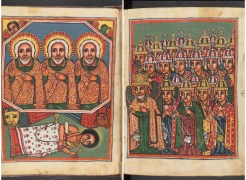
“Q&A: Eyob Derillo– Literatures of the Horn of Africa, a conversation series[…] Josephine Stanton: With these texts more accessible, what can we learn from them? Do you think they offer an insight into aspects of history previously unknown or ignored?
British Library MS Or 723 18th century, the Life and Acts of Saint Takle Haymanot. One of the manuscripts looted during the Battle of Maqdala 1868.
Eyob Derillo: The fascinating thing about this [the British Museum Maqdala] collection is that it covers all aspects of Ethiopia – from magic, divinations, mathematics, geology, philosophy, poetry and art. What you can learn is the depth of the tradition that Ethiopia has. Another important thing made more accessible through these cultural artefacts is science. When I say science here, I’m talking about early 17th and perhaps late 16th century medicine, such as plants and their use.
Folklore and the belief in magic is also preserved in these artefacts. We Ethiopians have charms to make anyone fall in love with you; we have incantations to destroy or kill someone; to turn someone into a lion or a python. The overarching lesson that one can learn from this collection however is that Africa does have a manuscript culture. It is not the random act of a single tribe, which has been a predominant view in the West, but rather vast, and throughout Ethiopia. There is a strong literary culture and oral history that is preserved in manuscripts…
https://africainwords.com/2023/06/01/qa-eyob-derillo-literatures-of-the-horn-of-africa-a-conversation-series/

To read Dr Bekele’s work, and other pieces cited in the interview, please follow the links embedded in the transcript above. Dr Bekele’s book (2019) is published by Brill:
“Locating Politics in Ethiopia’s Irreecha Ritual
Series: Studies of Religion in Africa, Volume: 49
Author: Serawit Bekele Debele
In Locating Politics in Ethiopia’s Irreecha Ritual Serawit Bekele Debele gives an account of politics and political processes in contemporary Ethiopia as manifested in the annual ritual performance. Mobilizing various sources such as archives, oral accounts, conversations, videos, newspapers, and personal observations, Debele critically analyses political processes and how they are experienced, made sense of and articulated across generational, educational, religious, gender and ethnic differences as well as political persuasions. Moreover, she engages Irreecha in relation to the hugely contested meaning making processes attached to the Thanksgiving ritual which has now become an integral part of Oromo national identity.”
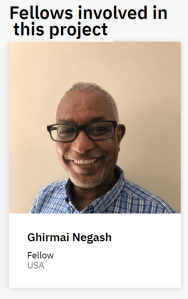
 P.S.: those particularly interested in language studies and “firsts”, might want to head straight to the third Q&A in this Literatures of the Horn of Africa conversations series with Prof. Ghirmai Negash, who discusses, among other interests and projects, his translation of the first Eritrean Tigrinya-language novel, The Conscript.
Especially after my well-received translation of the first Eritrean, Tigrinya-language novel, The Conscript (2013), I also wanted to translate the first Ethiopian, Amharic-language novel, Tobiya (written in Amharic in 1908) by Afeworq Gebre Iyesus. Beyond its historical significance, Tobiya is paramount for its literary and linguistic qualities as well as for the understanding of Ethiopia’s history and culture at the intersections of (pre-colonial) tradition and modernity. Written in “deep” idiom, Tobiya deals with the confrontation between so-identified “Christian” and “barbarian” peoples and nations, and depicts the dynamics and stakes of ethno-racial, religious and territorial wars in an early African political geography. It also alarms about the dangers of misunderstanding and lack of reconciliation, a reminder important then, as it is now…”
https://stias.ac.za/fellows/projects/translation-of-the-amharic-novel-tobiya-1908-into-english/
Categories: Conversations with - interview, dialogue, Q&A
 Q&A: Words on… Noisy Streetss’ ‘Love in Detty December’ anthology, III
  Words on… Maik Nwosu: A Voice above the fray (Q&A)
  Q&A: Spotlight Interview with Ellah Wakatama, Chair of the Caine Prize for African Writing
  Q&As: Nadia Davids’ ‘Bridling’ – on the Caine Prize Shortlist 2024
  africainwords.com
join the discussion: