For Chimamanda Ngozi Adichie readers in the UK, the film adaptation of Half of a Yellow Sun has been a long time coming. Widely anticipated by online forums including Adichie’s Facebook page, Half of a Yellow Sun’s world premier took… Read More ›

For Chimamanda Ngozi Adichie readers in the UK, the film adaptation of Half of a Yellow Sun has been a long time coming. Widely anticipated by online forums including Adichie’s Facebook page, Half of a Yellow Sun’s world premier took… Read More ›
Emerging Perspectives on Akachi Adimora Ezeigbo Edited by Rose A. Sackeyfio and Blessing Diala-Ogamba Akachi Adimora Ezeigbo has emerged as one of Nigeria’s leading female writers. Her distinguished career gained prominence in the early 21st century and continues to evolve… Read More ›
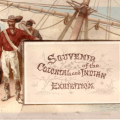
As early as 1886, Lagosian intellectuals were engaged in changing racist and stereotyped ideas of Africa and Africans. They made a conscious effort in showing an intellectual and vibrant city, interconnected to Europe and the Americas. In my thesis Producing… Read More ›
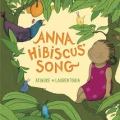
Last month I babysat a friend’s child. It was Friday night and there I was, sitting next to him in his bed: it was story telling time. I drew from a pile of books a colourfully covered one, with a… Read More ›
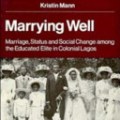
Sometimes apparently everyday topics of life can lead to rich rewards in terms of historical study. One example of this is (I hope she won’t mind me saying) is Kristin Mann’s study of men and women’s marrying patterns in Lagos… Read More ›
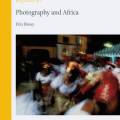
In Jurg Schneider’s recent post for Africa in Words he wrote of the way in which photographs make up a part of a huge although highly decentralized visual archive which is open-ended and still dynamically in the making. Jurg provided links… Read More ›
These are extremely interesting times for travel writing as a genre; a number of online- and print-based travel projects have been sprung up over recent years, all focusing on Africans travelling within Africa – some within their own countries, and… Read More ›
We’ve had a busy twelve months at AiW, one full of firsts – such as our linked ‘Series’ posts featuring Guest contributors, and the beginnings of our Q&As. The blog has now been running for two years, and we’ve gained new followers… Read More ›

Following our interview with Emmanuel Iduma, and his insights into the founding and evolution of Saraba Magazine, we are excited to now be offering a taster of the magazine by sharing some extracts from the latest Art Issue. Emmanuel Iduma and Dami… Read More ›

Emmanuel Iduma co-founded the Nigerian literary magazine Saraba in 2009. The magazine, now in its 14th issue, aims to ‘create unending voices by publishing the finest emerging writers’. Each issue is published in PDF and ‘themed’ – with recent editions… Read More ›
By AiW Guest: Uche Peter Umez. “Different writers in different locations at different times find their different reasons for writing.” Interviewer’s Note: AFAM AKEH, the author of Stolen Moments (1988), has won prizes and other honours for his poems, short stories… Read More ›
This is the first post of ‘African Study Classics’: a series about how intellectuals used key African history, anthropology, sociology and literature books in their own work. We are inviting writers (academics or not) to tell us about a book… Read More ›

Based at the University of Sussex, School of English. Principal Investigator – Professor Steph Newell. Fixed term for 5 years, 18.25 hours per week Closing date for applications: 15 September 2013 Expected start date: As soon as possible This European Research… Read More ›

This post is the first in an occasional series of writer profiles, looking especially at those working in African languages. For readers and speakers of Yoruba, Akínwùmí Ìsòlá [pronounced Ishola] needs little introduction. A charismatic and stern-looking figure affectionately nicknamed… Read More ›
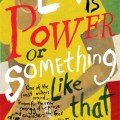
It feels exceptionally hard in a short review to do justice to the layers of story, character and life in A. Igoni Barrett’s second collection of short stories Love is Power or Something Like That. The characters that people these stories range across generation… Read More ›

Pelu Awofeso is a travel writer, journalist and publishing entrepreneur based in Lagos, Nigeria. For over ten years Pelu has been travelling across Nigeria and publishing travel writing in newspapers in Nigeria and beyond, and in his own travel books. His… Read More ›
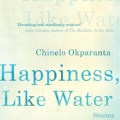
On Monday Tope Folarin’s ‘Miracle’ was announced as the winner of the 2013 Caine Prize for African Writing. Building up to this announcement the five shortlisted writers spent a week in the UK, talking about their writing in the media… Read More ›
I just talk without direction, like the harmattan wind that just blows and blows, scattering dust. Me, I just like to say it as I remember it. And sometimes you have to explain the story. Sometimes the explanation lies… Read More ›
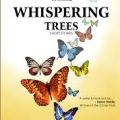
AiW Guest Sylvia Gasana Hauntingly beautiful! Those are the two first words that come to mind when describing Abubakar Adam Ibrahim’s ‘The Whispering Trees’. I’m always very excited to read a story that has a title that instantly transports you…. Read More ›
AiW Guest Gbemisola Abiola. Tope Folarin’s Miracle depicts the prevailing belief in Christian supernaturalism, and the apparent promise of prosperity it holds for the African adherent, as the means of achieving success in the Diasporas. While the story is set in… Read More ›
 africainwords.com