
With AiW Guest: Tom Jenks, Editor and Co-Founder of Narrative Magazine.
AiW note: Today, in the penultimate of the ‘Words on / Caine Prize’ 2024 Shortlist Q&A series, our “twinned” Writer-Publisher Q&A set is with Tom Jenks, editor and co-founder of Narrative Magazine, the publication forum for Tryphena Yeboah’s 2024 Caine Prize shortlisted story, ‘The Dishwashing Women’ (2022).
Tryphena’s responses — from the other side of the editorial desk, as it were — are also out today. You can find them, with links out to our 2024 Caine Prize Shortlist coverage so far, here.
NB: As with our previous coverage of the Prize, we spoke to our interviewees before the winner was announced on September 17th.

AiW: Many thanks for agreeing to speak with us and open up these often less visible roles in the outcomes of a literary prize, Tom, and on behalf of Narrative Magazine. Here at AiW, we believe these routes are particularly important in the broader literary ecosystems of the circulation and valuation of African writing, and are grateful to have your thoughts.
As its publisher, could you tell us about your journey of/with the 2024 Caine Prize shortlisted story you published, your “story of the story”, so to speak? How did it come to you? What made you “see” it, initially, for the magazine, and as a Caine Prize story?
Tom Jenks, Narrative Magazine: Tryphena Yeboah’s work was originally recommended to us by her writing professor, Richard Bausch, in 2019. We published the first story that we received from her and have continued to publish her work, finding it some of the most intelligent, vigorous, felt, and relevant work we are seeing today.
In a Prize noted for its “firsts”, it’s noticeable that this year, all the Caine Prize stories on the shortlist have been first published in, and so submitted to the Prize, by literary magazines founded and based in the US — all with a strong online presence and subsequent breadth of reach. Could you perhaps comment on that for us by telling us a bit more about your work with African writing, how it fits into your broader remit and your experience of publishing as a literary magazine?
Forty years ago, when I was working in New York publishing, at a time when Toni Morrison was editing at Random House and doing so much to bring Black writers forward, I was appalled to hear colleagues voice the conventional wisdom of the time: “Black people don’t buy books.” From then to know I’ve sought to bring forward the best writing that I can, that we can, from writers of any stripe.
Looking to you as a reader, is there a serendipitous or interesting, perhaps even uncanny, book / text related thing that’s happened to you? Perhaps a happy, weird accident that has occurred around books or writing that you can share with us; or a strange, significant – outrageous, even – thing you have done, or would do, because of, or for a book (text / story / piece of writing)?
Reading is good; rereading is better. I can’t say with certainty how many times—forty? fifty?—I’ve read James Baldwin’s “Sonny’s Blues” . . . if a story succeeds, the words carry the reader all the way home, back to life outside the story, having received gifts along the way. “Sonny’s Blues” is such a story, an eternal one, a masterpiece that profoundly affected my understanding of life, as it has affected the hearts of many millions who’ve read the story.
What are the most ethical and/or heart-lifting changes in practice you’ve seen happening across your industry/industries recently? What would you like to see become more visible and celebrated going forward (jobs, roles, avenues, practices)?
Possibly the most important work to be done today, given the effects of technology, is to encourage reading and writing—literary appreciation—among today’s children and youth. And it begins with parents reading aloud to their children and with telling stories.
What would you say is the best investment you’ve made in your professional self / selves, or the most valued advice you’ve received about navigating your industry (or industries)?
Many years ago, when I was an undergraduate, I asked James Alan McPherson, “Jim, can I do this work?” He’d just won the Pulitzer Prize, which freaked him out. He seemed to fear that the award and attention would distort him, and he was hiding out, somewhat irritably. He snapped at me, “I’m not God.” I reeled out of his office and walked around and around the quad, not fully comprehending. A few months later, as I was about to graduate, I went back to Jim, not having gotten the message the first time, and said to him, “I’m trying to figure out what to do with the next two or three years.”
“Yep,” he said, “that’s what we’re all trying to figure out.”
Across time those two pieces of information have been among the most useful I ever received.
Finally, how can our blog, books, reading, and online communities best offer support for your work with African writing?
As Adam Clayton Powell Jr. liked to say, “Keep the faith, baby.” Get the word out. Spread the good news.
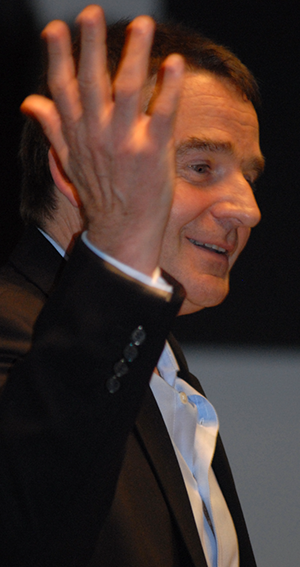
Tom Jenks is the co-founder and editor of Narrative Magazine (narrativemagazine.com). He is a former editor of Esquire, Gentlemen’s Quarterly, and The Paris Review, and a senior editor at Scribner’s, where he edited Hemingway’s posthumous novel, The Garden of Eden. He is the author of My Reading: James Baldwin’s “Sonny’s Blues” (Oxford University Press) and of A Poetics of Fiction (Narrative Press). With Raymond Carver, he edited American Short Story Masterpieces. He has written for Harper’s, Ploughshares, Esquire, Vanity Fair, The American Scholar, the Los Angeles Times, Condé Nast Traveler, the BBC, Manhattan, Inc., the Missouri Review, Columbia, and elsewhere. Jenks has taught at the Iowa Writers’ Workshop, the Creative Writing Programs at the University of California (Irvine and Davis), Washington University in St. Louis, the Squaw Valley and Bennington Summer Writing Workshops, and privately in New York, Boston, Washington, DC, Chicago, Denver, Seattle, Portland, Los Angeles, and San Francisco.
Tryphena’s story,‘The Dishwashing Women’, as it appeared in Narrative Magazine in 2022, can be accessed via the Caine Prize website, alongside all the stories shortlisted for the 2024 Prize; or by clicking direct on ‘Shortlist…The Stories’ image below.

For more on the 2024 shortlist and the changes to the format of the Prize, looking ahead to its anniversary edition in 2025, visit: https://www.caineprize.com/.
With congrats and thanks to all our Q&A Caine Prize Shortlist 2024 participants; our reviewers; and special thanks to Ajoke Bodunde and Ellah Wakatama at the Caine Prize.
‹
Categories: Conversations with - interview, dialogue, Q&A
 Q&A: Words on… Noisy Streetss’ ‘Love in Detty December’ anthology, III
  Words on… Maik Nwosu: A Voice above the fray (Q&A)
  Q&A: Spotlight Interview with Ellah Wakatama, Chair of the Caine Prize for African Writing
  Q&As: Nadia Davids’ ‘Bridling’ – on the Caine Prize Shortlist 2024
  africainwords.com
join the discussion: