 AiW note: this is the first in a welcome return for us at AiW to posts in the “Calls for…” category – calling for submissions to events, collections, issues, awards, all and sundries, etc. – in this case, for creative responses for an academic context. Nozipho Wabatagore, putting out the call, is a doctoral researcher in English with Creative Writing at the University of York (UK), who is organising a session, ‘Queer Africa: Resilience and Hopeful Now’, for the next annual Northeastern Modern Language Association Convention, to be held in March 2024, in Boston.
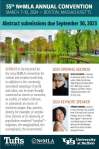
SURPLUS is the keyword for 2024 NeMLA convention for critical and creative work that, in addition to the commonly associated meanings of profit and value, can be more broadly construed as excess or excessive, as surfeit, or what is leftover, or unwanted: an excess of emotions (anger, fear, passion, desire), for example; or surplus time (leisure or its absence); or populations rendered “surplus”—migrants, the marginalized, the unemployed, the incarcerated.
The panel responds to this year’s convention theme of ‘surplus’, and invites creative contributions before NeMLA’s abstracts proposals deadline of September 30th. Read on for more about the panel and how to apply – see the link included at the foot of our Q&A – as well as to find out about what was behind it, inspirations, and more on Nozipho’s work in the African literary field…

Hello Nozipho. Thanks for talking with us about your research and the call for proposals for the upcoming panel you are organising for the next NeMLA convention in March 2024. Perhaps we could start with a nutshell vision of the panel – a who, what, where of it, if you will?
This is a call for creative responses; the vision for the panel is to open up space for creative writing in a prestigious academic conference context, such as NeMLA’s.
The title, ‘Queer Africa: Resilience and Hopeful Now’, sets the tone as one encompassing the strength and spirit of queer Africans.
The panel’s call reflects its consideration of the power and preparedness of creative writing as a medium urgently required to speak to our current political times, in a way that is responsive to both non-academic and academic audiences.
‘Queer Africa: Resilience and Hopeful Now’ is therefore calling for submissions in various genres, forms, and styles of the written and performed word that interrogate the intersection between African identity, queerness, and modernity. It will emphasise the beauty of being queer and African, and highlight writers and writing investigating the same.
The overall aim is to showcase storytelling as a means to share and communicate our hopes and desires about what queerness is, and can evolve into.
Why this, why now, in this, our current moment?
‘Queer Africa: Resilience and Hopeful Now’ expands on an area of literature I am passionate about, and currently engaged with in my own writing and research.
Additionally, this year, the experience of being queer and African has come under political scrutiny through radical movements and legislation passed that question queerness as being incompatible with African culture. In the face of this and being labelled as ‘unwanted’ or ‘surplus’ to limiting requirements of ‘African-ness’, it felt important to showcase fiction by emerging writers whose diverse understandings of queerness could contribute to empathy and togetherness in African communities, in the diaspora and on the continent.
Ultimately, via people writing and performing short stories, poems, novel extracts, and memoirs, the aim is to establish a mosaic of resilience and hope, for queer Africans to be represented and celebrated, in our current moment and beyond.
Could you tell us something about the pre-lives of the panel – when it seeded, what inspired you, how it has come to this point?
The idea for ‘Queer Africa: Resilience and Hopeful Now’ was rooted in a desire to attend a panel that explores queerness and African identities at a prestigious conference, like the NeMLA convention. It was seeded while attending this year’s (2023) NeMLA conference in late-March, in Niagara Falls, the theme of which was ‘resilience’; l was inspired to return with a panel that addresses a topic close to my research and heart.
The actual writing of the proposal began in May; I submitted it in June. I am now excited to see the diversity of submissions from prospective panellists writing about queer Africans, and travelling to Boston in 2024 to meet everyone in person.
Could you tell us a bit about your work more broadly – within the African literary/creative arts field, but also any overlaps with the (other) kinds of work you do or have done, roles you hold or have held, or any of the other more general and different sorts of professional hats you wear in your working day-to-day that have contributed to where you are now?
At the moment, I am in my second year as a doctoral researcher at the University of York, working on a practice-based thesis in English with Creative Writing. With the practice-based PhD at York, there are two parts to the written thesis: one is a critical research component, the other part is a creative written one, and a clear relationship must be established and demonstrated between the two.
For the critical research component (of 40,000 words), I am critiquing Zimbabwean and South African literature through a queer lens; I am currently researching the work of Yvonne Vera, Tsitsi Dangarembga, and Chwayita Ngamlana, with a view towards rethinking conceptions of family ties. For the creative part of the thesis, I am writing a novel about queer love, family, and the endurance of friendship, which is set in Zimbabwe.
It was the experience of working on African texts and Postcolonial Studies during my Master’s degree that led me to the practice-based PhD and my particular area focus. Before my MA in English Literature at the University of Leeds, I had studied Law there. I worked in the industry as a law intern in Harare for a few months before going on to Leeds for my BA, but for my Master’s, I decided to switch and focus on my passion: literature, particularly by writers from Zimbabwe and from the continent, and writing my own novels.
My MA confirmed my love and passion for African literary cultures, which l initially experienced during a discovery module in my third year of law school called “Postcolonial Literature”. During that module, l discovered some influential African theorists such as Franz Fanon’s The Wretched of the Earth, Black Skin, White Masks, and Ngũgĩ wa Thiong’o’s Decolonising the Mind.
Once my literary studies MA was underway, I was drawn to the traumatic history of colonisation and its aftermath, especially reading Veronique Tadjo’s The Shadow of Imana, which led me into researching dark tourism and national memory. Bessie Head’s The Cardinals and J. M. Coetzee’s Disgrace were fundamental for my ongoing engagement in South African literature. For my MA dissertation, I explored the microaggressions and white saviour complex in NoViolet Bulawayo’s We Need New Names and Chimamanda Ngozi Adichie’s Americanah. Discovering my own literary interests, sparked by the department’s encouragement in venturing beyond what was taught, are still some of the most exciting things about that period of study.
I also write poetry, short stories, and screenplays alongside my debut novel (which, as I mentioned already, is part of my PhD). I am involved in creative writing groups where emerging authors offer mutual support on writing practices.
Is there anything you feel our readers should know, that they perhaps might not yet or that they might need to, about working in the field and in your specialism, or the ways that you find yourself practising now – any particular challenges, joys, or experiences you would like to share with us?
Working in academia in the field of English literature is very exciting and rewarding, but even more so in my specialism of queer African literature because of the close-knit community of enthusiasts creating and expanding on areas that are currently under-researched.
One of the primary challenges is that most theorists are Western, and it can be difficult to apply those theories to African texts; however, this situation also brings the joys of flexibility and creativity in theoretical application.
Ultimately, queer African literature is a fascinating and fulfilling area that requires more Africans to join the dialogue – to think and theorise in insightful and far-reaching ways, and establish more profound knowledge.
What would you say is the best investment you’ve ever made in your professional self/selves so far?
Embarking on my doctoral research: I get to write a novel and thesis in a supportive, vibrant university and city.
What is the most valued advice you’ve received about navigating your industry?
Create a good work-life balance because it is easy to overwork and burn out.
Do you have any myth-busting advice in your professional life so far that you would want to share with others?
You do not have to treat your research like a 9-5 job. Instead, it would be best if you personalised your schedule. Choose where you work, the times, and when. The PhD is very flexible and personal, so be creative with it.
What are the most ethical and/or heart-lifting practices you’ve seen happening recently in your industry or working everyday?
When researchers open up about their positionality. This is useful in anchoring research in lived experiences, and admitting our limitations and/or advantages.
How can our online communities best support your work?
By applying to, and spreading the word about, my panel, ‘Queer Africa: Resilience and Hopeful Now,’ through your social media and across your creative-critical/academic networks.
Please also submit your proposals to the panel call by the deadline: 30 September, 2023 – and I look forward to reading them. The link is here: https://cfplist.com/nemla/Home/S/20608
Nozipho Wabatagore holds a degree in Bachelor of Laws and a Master of Arts in English Literature from the University of Leeds, and is currently completing her doctorate at University of York in the department of English and Related Literature. Her doctoral research focuses on rethinking family ties by applying a queer lens to Zimbabwean and South African novels. As part of the thesis, Nozipho is writing a novel that explores lesbian characters in Zimbabwe. You can find Nozipho on her Twitter and LinkedIn.
The Northeast Modern Language Association (NeMLA) is a non-profit organization of teachers, scholars, and students of literature, language, and culture as well as the largest regional affiliate of the Modern Language Association (MLA). NeMLA provides a forum for the dissemination of scholarship and the advancement of teaching in modern languages and literatures. They hold a yearly four-day convention to carry on a tradition of lively research and pedagogical exchange. This event showcases different areas of inquiry and includes regular sessions (panels, roundtables, seminars), interactive workshops, special events, caucus meetings, literary readings, film screenings, a separate undergraduate research forum, and guest speakers.
Categories: Calls for & opportunities, Conversations with - interview, dialogue, Q&A, Words on the Times...
 africainwords.com
join the discussion: